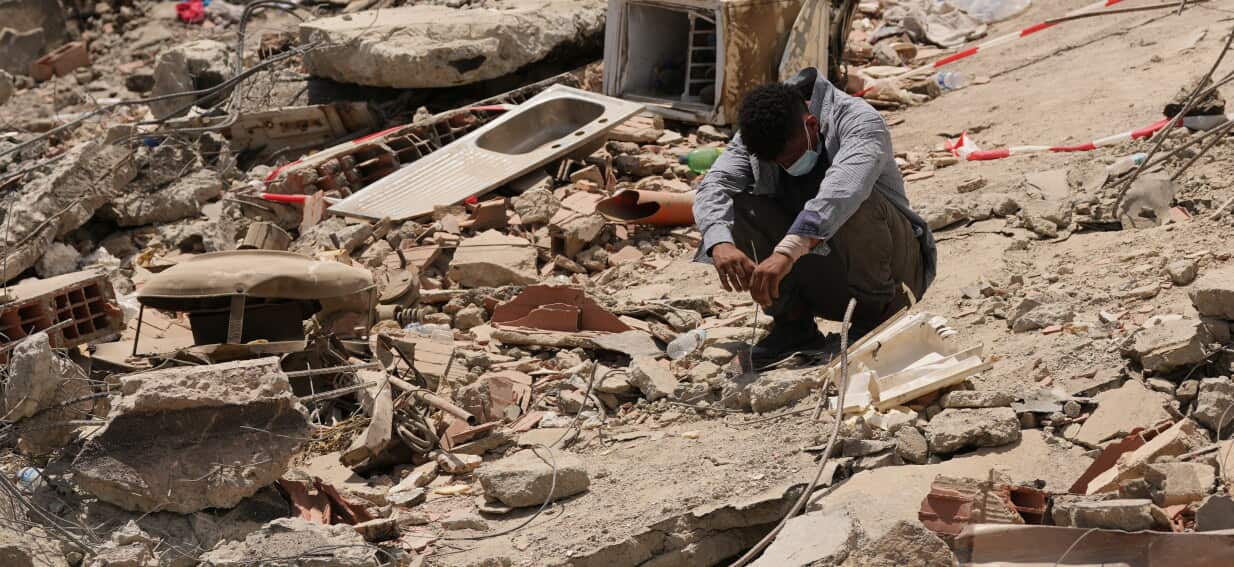
Five Palestinians, including a young boy, have been killed in the Gaza Strip, with another teenager losing his life in the West Bank, following a series of Israeli military operations. The escalating violence has drawn sharp criticism from human rights advocates, who decry the mounting toll on civilian lives, particularly among children.
The Israeli human rights organisation B’Tselem has condemned what it described as the "unprecedented killing of Palestinian children and teenagers," highlighting a grim trend in the protracted conflict. The latest fatalities contribute to a distressing pattern of violence across the Palestinian territories, which has seen an increase in both Israeli military actions and Palestinian casualties in recent months.
Gaza Raids Ignite Fury
According to reports from Al Jazeera, four men and a boy were killed in separate incidents across the Gaza Strip. Details surrounding these deaths remain contested, with Israeli authorities often citing legitimate security operations targeting militants. However, Palestinian sources and human rights groups frequently allege that civilians are caught in the crossfire or deliberately targeted, demanding thorough and independent investigations. The recent incidents have reignited calls for international oversight and protection for Palestinian civilians living under occupation and blockade.
Adding to the tensions, these strikes come at a time of heightened political instability and economic hardship in Gaza. The coastal enclave, home to over two million Palestinians, has been under an Israeli and Egyptian blockade for over 15 years. This has crippled its economy and exacerbated a humanitarian crisis, making life incredibly challenging for its inhabitants, many of whom are refugees.
West Bank Teenager Shot Dead
Concurrently, a Palestinian teenager was shot and killed in the West Bank. The occupied West Bank has also witnessed a surge in violence, including an increase in settler attacks on Palestinian communities and Israeli military incursions. These operations are often framed by Israeli authorities as necessary responses to rising militancy and acts of terror but are viewed by Palestinians and their advocates as an oppressive measure designed to further entrench the occupation and suppress dissent.
The death of the teenager adds to a growing list of young Palestinians killed in the West Bank this year. Human rights observers note a troubling pattern of lethal force being used against Palestinian youth during protests, clashes, and military raids. Calls for accountability from international bodies and a re-evaluation of Israel’s rules of engagement have grown louder amidst these repeated tragedies.
B’Tselem Condemns Child Casualties
The strong denunciation from B’Tselem underscores the profound impact of the conflict on the most vulnerable. The organisation’s statement regarding the "unprecedented killing of Palestinian children and teenagers" serves as a stark reminder of the human cost. For families in Gaza and the West Bank, the loss of children is an unbearable reality that perpetuates cycles of grief and despair.
International law dictates that all parties to a conflict must take all feasible precautions to avoid harming civilians, especially children. However, critics argue that these principles are often disregarded in the Palestinian territories. The ongoing violence not only claims lives but also inflicts deep psychological trauma on survivors, particularly children who are exposed to constant fear and instability.
Calls for International Intervention
As the death toll mounts, there are renewed appeals from Palestinian leadership and international human rights organisations for the global community to intervene. They urge an end to the occupation, a lifting of the Gaza blockade, and robust mechanisms to ensure accountability for human rights abuses. Without such intervention, many fear that the cycle of violence will continue unabated, claiming more innocent lives and further destabilising an alreadyvolatile region. The international community, including Australia, which often advocates for a two-state solution, faces increasing pressure to take a more assertive stance in addressing the root causes of the conflict and protecting Palestinian civilians.