The federal government is offering urgent consular assistance to the family of two Australians caught up in a catastrophic high-speed rail crash in Spain, authorities confirmed on Tuesday.
Consular officials mobilise in Madrid and Canberra
The Department of Foreign Affairs and Trade (DFAT) confirmed it was liaising with relatives and Spanish emergency authorities following the derailment, which has sent shockwaves through the European nation's transport network.
SBS News Top Stories reported that consular assistance is being provided to the family of the two Australians. Officials have declined to disclose specific details regarding the condition, location, or identities of the individuals involved, citing privacy obligations.
A DFAT spokesperson confirmed the department stood ready to offer whatever consular support was required, with Australian diplomats based in Madrid working alongside local authorities to establish the precise welfare of the citizens involved.
Emergency services confront scene of devastation
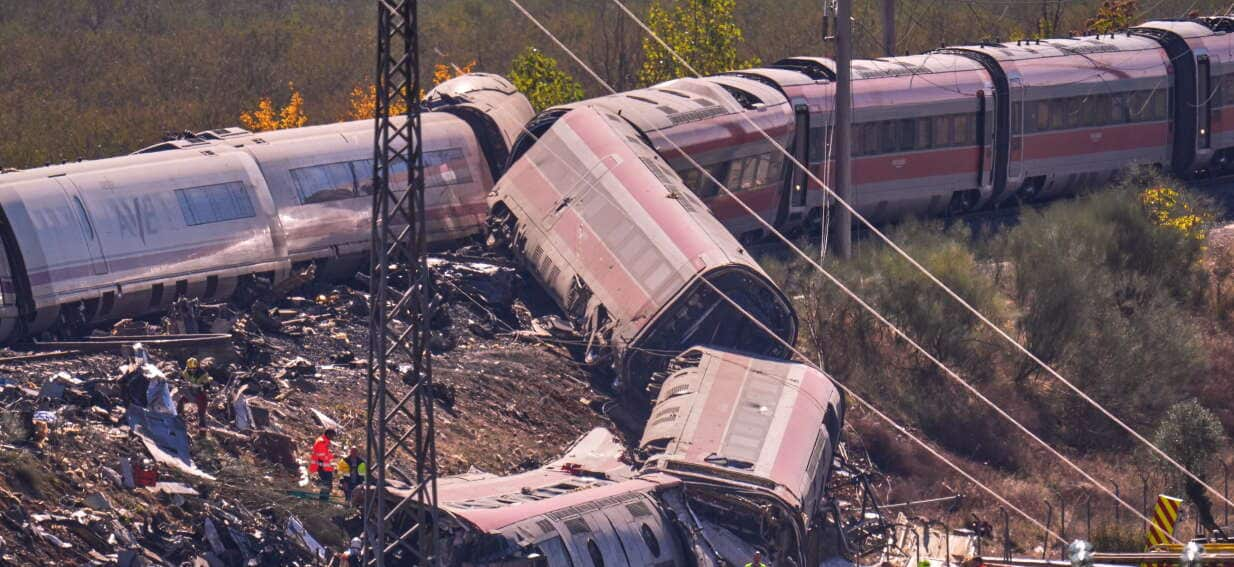
The incident, which unfolded on one of Spain’s principal regional rail corridors, involved an express passenger service travelling at substantial speed before violently leaving the tracks.
Rescue crews, including dozens of ambulances, fire units, and medical evacuation helicopters, converged on the crash site, where several carriages had folded against one another and tumbled down an embankment.
Emergency personnel worked through the wreckage, using hydraulic cutting gear to reach passengers trapped within the mangled metal compartments. Surviving passengers described a sudden violent shudder, followed by darkness, smoke, and flying debris as the carriages decoupled and ground to a halt against trackside infrastructure.
Scores of injured passengers have been transported to nearby municipal and regional hospitals, with Spanish trauma teams operating under emergency disaster protocols to treat critical injuries.
Investigation focuses on high-speed network safety
Spain’s state-owned rail infrastructure manager, Adif, alongside national railway operator Renfe, have initiated an urgent inquiry into the operational circumstances preceding the catastrophe.
Specialist accident investigators were deployed to examine the permanent way, review track signalling equipment, and retrieve data from the train's event recorders. While Spain’s extensive high-speed rail network is generally regarded as among the most technologically sophisticated in the world, the tragedy has prompted immediate scrutiny over infrastructure maintenance and speed controls.
Transport authorities have pledged a transparent and exhaustive review, stating that technical findings will be published as soon as telemetry analysis and physical site inspections conclude.
Support services opened for affected families
In Australia, the news has caused deep anxiety among expatriate and travel communities with ties to the Iberian peninsula.
DFAT has urged any Australians travelling in the affected region to make direct contact with their families back home to confirm their safety and alleviate distress.
Families concerned about the welfare of loved ones known to be travelling on the affected service, or in the vicinity of the derailment, have been urged to contact the Australian Government’s 24-hour Consular Emergency Centre.