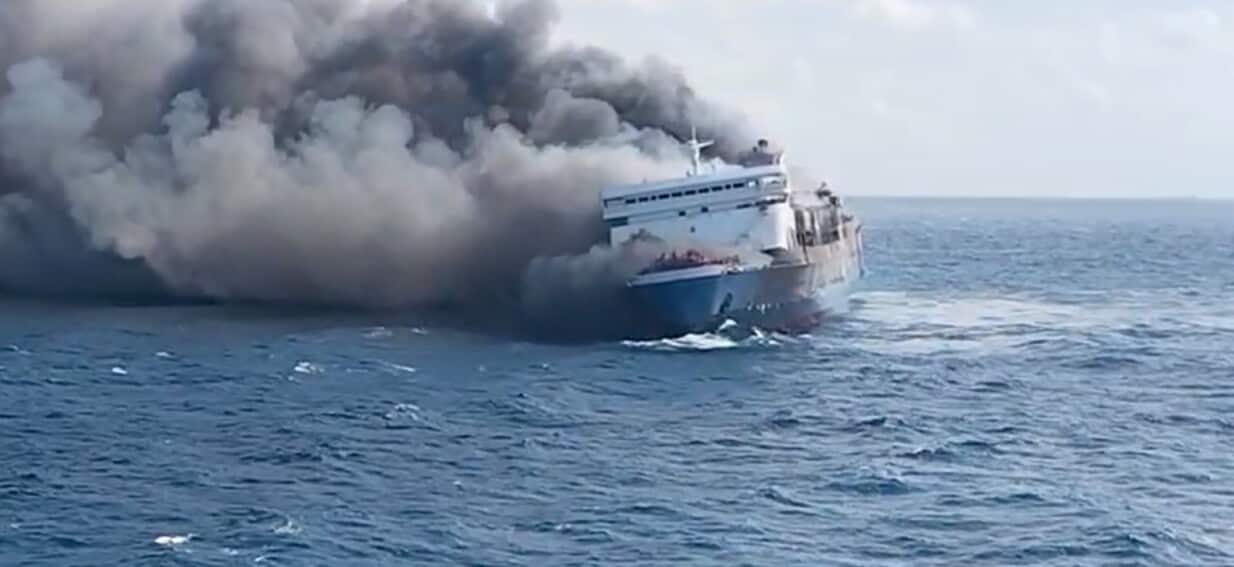
Five people have died and 41 remain missing after a passenger ferry caught fire on Sunday near Makassar city in South Sulawesi, in what marks Indonesia’s second significant maritime disaster in two months. The incident has sent shockwaves through the region, prompting renewed scrutiny of safety protocols on the nation's often-overcrowded waterways.
The ill-fated vessel, reportedly carrying dozens of passengers, was engulfed in flames while en route from Makassar. Initial reports from SBS News Top Stories indicated the swift and devastating nature of the fire, which quickly spread through the ferry, leaving little time for those aboard to escape.
Inferno at Sea, Desperate Rescue Efforts
Witnesses described a scene of terror as thick black smoke billowed from the ferry, followed by towering flames. Emergency services were immediately mobilised, with rescue teams comprising the local search and rescue agency, police, and naval units scrambling to the scene. Their efforts were hampered by the intensity of the blaze and the rapid deterioration of the vessel.
Survivors, many of whom were pulled from the water by passing fishing boats and rescue vessels, recounted harrowing tales of jumping overboard to escape the inferno. Some sustained severe burns and injuries, while others were treated for shock and hypothermia. The immediate priority for authorities remains the search for the 41 missing individuals, with hopes dimming as the hours pass since the conflagration.
A Troubling Pattern of Maritime Incidents
This latest tragedy casts a grim shadow over Indonesia's maritime transport network, which is heavily reliant on ferries to connect its vast archipelago of some 17,000 islands. The nation has a long history of ferry accidents, often attributed to lax safety standards, overcrowding, and inadequate maintenance. This incident follows closely on the heels of another fatal ferry mishap just two months prior, raising serious questions about the effectiveness of existing regulations and their enforcement.
Industry experts suggest that while significant investment has been made in larger, more modern vessels, many smaller, inter-island ferries operate with minimal oversight. The sheer volume of passenger traffic, particularly during peak seasons, often leads to vessels exceeding their stated capacities, a common factor cited in previous disasters.
Calls for Immediate Safety Review
The Indonesian Ministry of Transportation has launched an immediate investigation into the cause of the fire, promising a thorough review of all contributing factors. There are growing calls from maritime safety advocates and concerned citizens for a comprehensive overhaul of national ferry safety protocols, including more rigorous inspections, stricter enforcement of passenger limits, and improved crew training for emergency situations.
The economic impact of such incidents is also considerable, not just in terms of lost lives and property, but also in eroding public confidence in a crucial mode of transport. For Australian travellers considering regional voyages, these events serve as a stark reminder to meticulously check the safety records and operating standards of any ferry service. The cost of a few extra dollars for a reputable operator pales in comparison to the potential consequences of a disaster at sea.
Search Continues Amidst National Mourning
As rescue operations continue into their second day, families of the missing gather at local ports, anxiously awaiting news of their loved ones. The nation holds its breath, hoping for miracles, while simultaneously grappling with the painful reality of another preventable tragedy at sea. The government faces mounting pressure to deliver concrete reforms to prevent further loss of life on its vital, yet increasingly perilous, waterways.