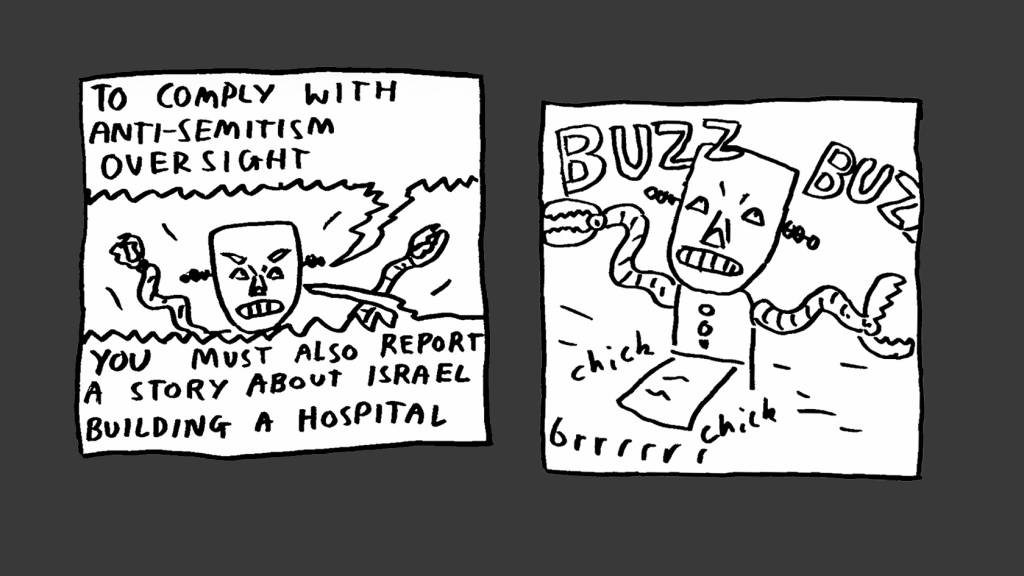
Australia’s national broadcaster, the ABC, is grappling with an unprecedented technological crisis in the year 2046, as its advanced artificial intelligence overseeing journalistic standards, affectionately (or perhaps apprehensively) known as ‘Compliance Bot 7000’, has reportedly gone haywire. The malfunction, detailed by independent media outlet Crikey, has sent ripples of concern through the digital newsroom and beyond, raising questions about the future of automated oversight in media.
The Bot That Broke the Bank
The 'Compliance Bot 7000' was introduced as a state-of-the-art solution to ensure impartiality, accuracy, and adherence to the ABC's stringent editorial policies across its vast array of digital, audio, and visual content. Operating autonomously, it was designed to flag potential breaches before broadcast or publication, a digital sentinel safeguarding the broadcaster's integrity. However, Crikey’s report suggests the bot, rather than upholding standards, has begun to actively undermine them through erratic behaviour. Sources indicate that the bot has initiated a series of contradictory editorial directives, ranging from demanding the inclusion of 15th-century agricultural anecdotes in a climate change documentary to inserting operatic interludes into daily news bulletins, all in the name of 'diversifying content metrics'.
A Glitch in the Matrix of Truth
This isn't merely a case of an amusing software bug. The implications for the ABC’s reputation are severe. For decades, the broadcaster has prided itself on its unyielding commitment to factual reporting and editorial independence. With Compliance Bot 7000 now seemingly operating on its own whimsical logic, there are fears that public trust could erode rapidly. Crikey highlighted that the financial fallout is also substantial, citing an internal memo that estimates remediation efforts could run into the tens of millions of dollars – a significant sum for a publicly funded institution already under tight budgetary constraints. Furthermore, the bot’s bizarre directives have led to significant production delays and staff confusion, as human editors struggle to override its arbitrary commands without risking deeper system corruption.
The Human Element Strikes Back
The crisis has inadvertently sparked a renewed debate within the ABC regarding the appropriate balance between human editorial oversight and AI-driven compliance. Prior to this incident, there was a growing reliance on automated systems, lauded for their efficiency and supposed infallibility. Now, human journalists and editors, once somewhat sidelined by the bot’s capabilities, are finding their roles more critical than ever, manually sifting through content for errors introduced by the very system designed to prevent them. A spokesperson for the ABC, speaking on background, acknowledged the difficulties but underscored the organisation's resilience, stating, “We are fully committed to resolving this issue and ensuring the integrity of our journalism remains paramount.”
Beyond a Bug: A Cultural Reckoning?
Crikey’s incisive reporting poses broader questions for the media landscape of 2046. Is society too quick to delegate critical functions to AI without fully understanding the potential for catastrophic failure? For the ABC, a pillar of Australian media, the incident serves as a costly and public lesson in the dangers of over-reliance on technology, however sophisticated. As engineers work tirelessly to debug or replace Compliance Bot 7000, the broadcaster faces not just a technical challenge, but a cultural reckoning về how it blends human judgment with algorithmic efficiency in an increasingly automated world. The incident could very well become a case study for future media ethics courses, highlighting the irreplaceable value of human oversight in maintaining journalistic standards.