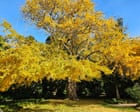
A monumental 160-year-old ginkgo tree in Geelong’s historic botanic gardens, long cherished by couples exchanging nuptial vows beneath its golden boughs, has officially been crowned Victoria’s tree of the year.
Arboreal crown for a botanical giant
The majestic specimen, which stands at an imposing 20 metres tall, claimed top honours in the annual competition run by the National Trust of Australia (Victoria), The Guardian Australia reported. Believed to be the largest Ginkgo biloba in the state and quite possibly across the entire continent, the tree was cultivated from seed during the early decades of Geelong’s colonial settlement.
The annual contest highlights remarkable specimens across the state, celebrating trees of outstanding heritage, ecological, and cultural importance. The Geelong ginkgo secured the title following widespread public backing, prevailing over a competitive field of shortlisted contenders from across regional Victoria and suburban Melbourne.
A century of romance beneath ancient boughs
For more than sixteen decades, the arboreal giant has served as an intimate outdoor sanctuary for generations of visitors. Situated in the heart of the Geelong Botanic Gardens, the tree has become synonymous with local milestones, serving as the setting for countless marriage ceremonies and family portraits.
Staff and regulars at the municipal gardens regard the tree as the most sought-after wedding location in the precinct. Each autumn, its fan-shaped foliage transforms into a luminous canopy of deep saffron and gold, drawing visitors from across Victoria who gather to walk upon the blanket of dropped leaves. The tree's longevity has interwoven it tightly into the social and sentimental fabric of the regional city.
Conserving irreplaceable urban canopies
Beyond celebrating botanical beauty, the award serves as a timely reminder of the pressing need to preserve significant urban canopies. The National Trust administers the Victorian Significant Tree Register, an inventory designed to document and advocate for the protection of historic trees against encroaching property developments, infrastructure works, and climatic shifts.
Conservation advocates note that urban trees of this scale and vintage are increasingly rare across Australia’s expanding metropolitan belts. While younger saplings are frequently planted in municipal offsetting schemes, environmentalists caution that new plantings take generations to replicate the microclimate cooling, carbon sequestration, and cultural gravity provided by mature centenary specimens.
Living fossils enduring through centuries
The victory also draws renewed public attention to the singular natural history of the ginkgo genus. Known to science as a "living fossil", Ginkgo biloba is the sole surviving species of an order of plants that flourished more than 200 million years ago, surviving major prehistoric extinction events.
Renowned globally for its astonishing resilience to environmental stressors, pests, and urban pollution, the species has persevered in Geelong with remarkable vigour. Having weathered more than a century and a half of maritime weather, droughts, and industrial growth along Corio Bay, Geelong’s champion ginkgo now enters the state’s ecological history books with its stature officially codified.