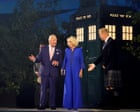
The Commonwealth Games, a sporting spectacle teetering on the brink of cancellation, exploded into a vibrant celebration in Glasgow on Thursday evening. What could have been a somber affair became a kaleidoscope of Scottish pride and quirky surprises, culminating in the surreal sight of King Charles and Queen Camilla materialising from a full-sized replica of the iconic Doctor Who TARDIS.
The unexpected royal entrance, immediately followed by a mechanical Loch Ness Monster roaring the opening bars of 'Flower of Scotland,' set an unmistakably playful tone for an event that has faced significant headwinds. Guardian Australia Sport reported on the whimsical opening, noting the TARDIS, while a clear nod to the popular British sci-fi series, also paid homage to Scottish architect Gilbert MacKenzie Trench, who designed the original police boxes that inspired the time-traveling spacecraft.
From Crisis to Caledonian Cheer
The road to Glasgow 2026 has been fraught with challenges. The Games were originally due to be hosted by the Australian state of Victoria, but financial pressures forced a dramatic withdrawal. This move plunged the future of the multi-sport event into serious doubt, with many speculating whether a suitable replacement could be found in time. The situation, according to Guardian Australia Sport, was so dire that the Games faced being “exterminated,” a fittingly dramatic Doctor Who-esque descriptor, before Glasgow stepped in. The Scottish city's eleventh-hour intervention has been widely praised, injecting much-needed optimism and stability into the Commonwealth Games Federation.
A Budget-Conscious Spectacle
While the opening ceremony was rich in spectacle, it also underscored Glasgow's commitment to delivering a financially responsible event. Unlike the exorbitant budgets often associated with major international sporting events, Glasgow has pledged a more modest, yet still impactful, approach. The estimated cost of hosting the Games for Glasgow is understood to be significantly less than the billions that had been projected for Victoria, demonstrating a new paradigm for host cities grappling with economic realities. This fiscally prudent approach, combined with the successful rollout of the ceremony, suggests that future Games might look to Glasgow's model as a blueprint for sustainability.
Australia's Absence and Future Prospects
For Australian sports fans, the Glasgow Games will undeniably feel different without the home-turf advantage that Victoria would have offered. The economic implications of Victoria's withdrawal, which included a payout of around AUD $380 million to the Commonwealth Games Federation, continue to be debated nationally. However, the successful launch in Glasgow provides a reassuring signal that the Games, despite their vulnerabilities, retain a strong sense of purpose and appeal. Australian athletes will now converge on Scotland, aiming to maintain their nation's proud sporting record, albeit on a less familiar playing field. The focus will now shift from the administrative drama to the athletic prowess on display, as Glasgow prepares to host thousands of athletes from across the Commonwealth for what promises to be a memorable, if unexpectedly brought-to-life, sporting fiesta.