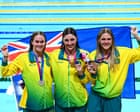
Glasgow bore witness to an unparalleled display of Australian swimming prowess as the Dolphins concluded the six-day aquatic program with an astonishing 37 gold, 16 silver, and 23 bronze medals. The record-breaking haul, which eclipsed previous Commonwealth Games benchmarks, cemented Australia's status as a formidable force in global swimming.
Heading into the Games, there was a quiet apprehension among Australian swimming enthusiasts. The absence of Olympic and world champion Kaylee McKeown due to illness, coupled with Ariarne Titmus's shock retirement last year, left significant voids. Compounding these challenges, rising star Mollie O’Callaghan battled a spinal stress fracture and a shoulder complaint, raising questions about the team's depth. However, any such concerns proved entirely unfounded as a new generation of talent, alongside established stars, stepped up to the blocks.
Record Books Rewritten at Tollcross
Guardian Australia Sport reported that the Dolphins had already equalled the record for most gold medals won at a single Commonwealth Games – 28, matching the 2018 Gold Coast Games tally – on the penultimate night of competition. Yet, the final evening in Glasgow's Tollcross Swimming Centre saw the team sensationally blow past this benchmark. A relentless surge of individual victories and commanding performances in both medley relays propelled Australia to an unprecedented 37 gold medals across able-bodied and para-swimming disciplines.
This monumental achievement underscores an unexpected but significant changing of the guard within the Australian team. While the nation has long been a powerhouse in the pool, this performance, achieved without some of its most recognisable names, hints at a deeper well of talent poised to dominate for years to come. The depth of the squad was evident, with multiple athletes stepping into leading roles and delivering under pressure, proving that the future of Australian swimming remains incredibly bright.
Unearthing Future Champions
The sheer volume of medals, particularly gold, suggests that the Australian swimming pathway is effectively nurturing a robust pool of athletes. The resilience shown by the team, adapting to the absence of key figures and still delivering such a dominant performance, bodes well for forthcoming international competitions. It highlights robust coaching structures and a competitive environment that pushes athletes to excel, regardless of individual star power.
Observers noted the seamless integration of emerging talent with seasoned campaigners, creating a formidable unit. This blend of experience and youthful exuberance appears to be a recipe for continued success, offering a strong foundation for the Dolphins as they look towards the Paris Olympics and beyond. The Glasgow performance sends a clear message to rivals: Australian swimming is not only thriving but also evolving, with new stars ready to claim their place on the world stage.
A New Era of Aquatic Dominance
The strategic planning and development within Swimming Australia appear to be paying dividends, fostering an environment where multiple athletes can achieve peak performance. The record haul in Glasgow is not merely a statistical anomaly but a strong indicator of sustained excellence. The focus now shifts to maintaining this momentum, refining techniques, and ensuring the continued development of both current champions and the next wave of talent. The Dolphins' commanding performance at the Commonwealth Games provides a thrilling preview of what is likely to be a golden era for Australian swimming.