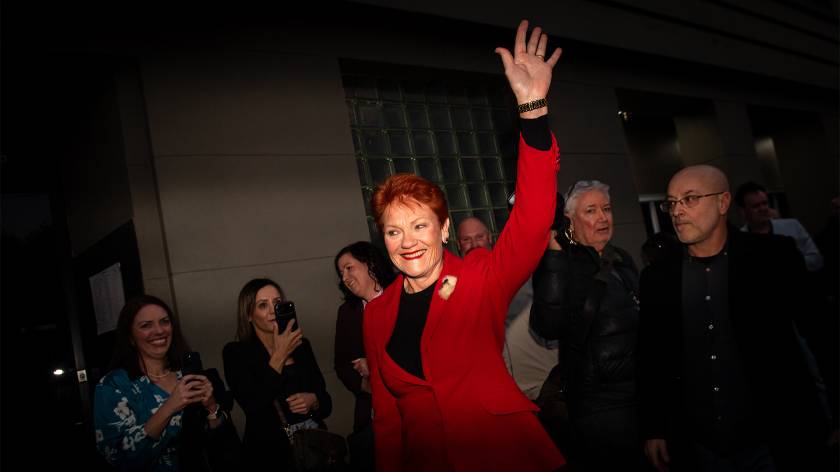
In an incident that has raised eyebrows regarding media transparency and political access, Pauline Hanson's One Nation party recently hosted a 'Meet the Candidates' event in Melbourne that saw a selective and, at times, bizarre approach to journalistic presence.
While several prominent media outlets were reportedly barred from entry, a reporter from the independent news publication Crikey found themselves inadvertently admitted, only to be swiftly ushered out in what they described as one of their strangest professional experiences.
Unforeseen Entry into a Closed Circle
The Crikey journalist arrived at the undisclosed Melbourne venue, anticipating the usual pre-event media scrum and accreditation process. However, to their surprise, they were granted entry without challenge, observing a noticeable absence of other mainstream media representatives. This initial, unfettered access provided a rare glimpse into the internal dynamics of a One Nation gathering, a perspective often obscured by carefully managed public relations.
Inside, the atmosphere was described as surprisingly subdued, a stark contrast to the often-combative public persona of the party leader. Attendees, a mix of dedicated party members and curious voters, mingled while awaiting Senator Hanson's address. The Crikey reporter, keenly observing the proceedings, began to gather initial impressions, noting the themes and rhetoric being presented to the party's base.
The Abrupt Ejection
The period of unexpected access was, however, short-lived. As the event progressed, the presence of an unaccredited, albeit admitted, journalist from Crikey seemingly came to the attention of event organisers. What followed was a polite but firm request for the reporter to leave the premises. No specific reason was provided for the sudden change in access, leaving the journalist to speculate on the internal communications or oversight that led to their initial entry.
The incident, as Crikey reported, highlights a growing trend among some political entities to control narratives by carefully curating who has access to their events. This selective approach can limit the breadth of reporting and potentially obscure issues that might be scrutinised by a diverse media contingent. The reporter’s swift removal underscores a clear desire by One Nation to dictate the terms of media engagement, particularly at events perceived as internal or for a sympathetic audience.
Questions of Transparency and Media Freedom
The episode raises pertinent questions about journalistic freedom and the right of the public to receive comprehensive information from a variety of sources. When political parties actively bar certain news organisations, it can impede the democratic process by limiting scrutiny and potentially fostering an environment where unchallenged narratives can take root. The Australian media landscape thrives on diverse perspectives, and incidents like this serve as a reminder of the ongoing challenges journalists face in accessing and reporting on political figures and events.
While political parties are within their rights to manage their events, the consistent exclusion of established news outlets from public or quasi-public forums can be viewed as an attempt to circumvent accountability. The Crikey reporter's experience, though brief, offers a unique insight into the methods employed by some political organisations to manage their public image and control the flow of information, prompting broader discussion within journalistic circles about navigating such increasingly common scenarios.