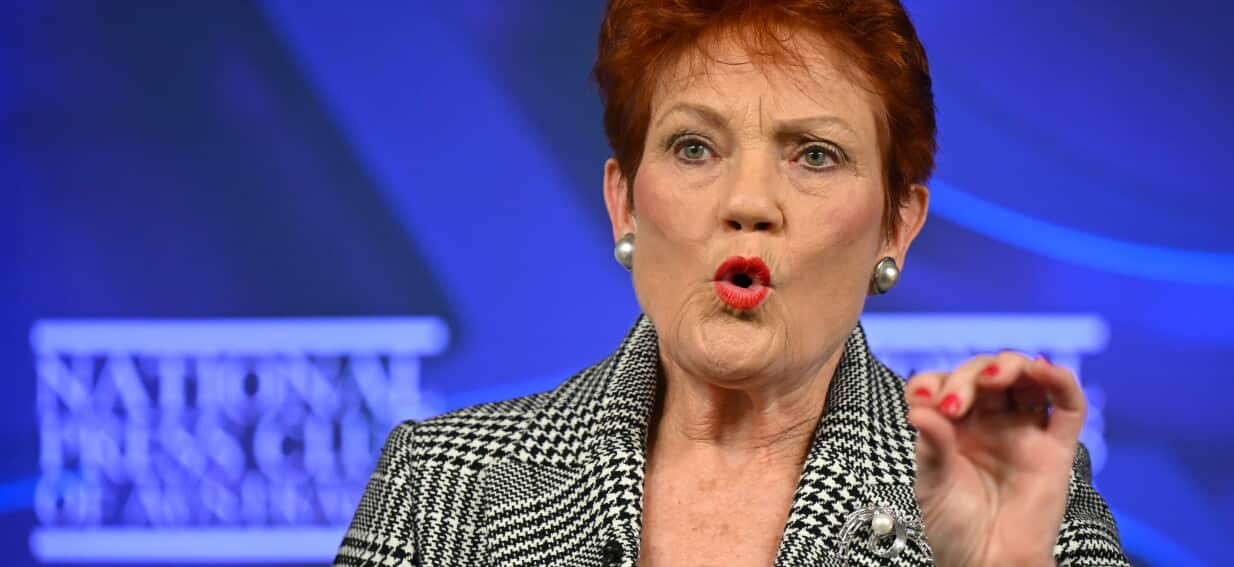
Pauline Hanson’s recent comments characterising domestic violence as a ‘two-way street’ have ignited fierce debate, with experts unequivocally labelling them as dangerous misinformation that significantly undermines efforts to address a pervasive societal issue. Critics argue such remarks not only trivialise the gravity of gendered violence but also actively discourage victims, predominantly women, from seeking essential help and support.
The Peril of Misinformation
The One Nation leader's assertions, made during a recent public appearance, have been widely condemned for inaccurately portraying the dynamics of domestic abuse. Researchers from The Conversation AU, a prominent academic analysis platform, reported that Hanson's viewpoint dangerously blurs the lines around culpability and victimhood. This narrative, they cautioned, risks creating a hostile environment where survivors feel their experiences are not believed or are somehow self-inflicted, thereby increasing isolation and reluctance to report abuse to authorities or support services.
According to data from the Australian Institute of Health and Welfare (AIHW), one in four Australian women has experienced violence from an intimate partner since the age of 15, compared to one in 13 men. These statistics paint a stark picture, demonstrating a clear gendered pattern in the perpetration and experience of domestic violence. The Conversation AU highlighted this disparity, reinforcing that while men can be victims, the overwhelming majority of perpetrators and severe impacts are borne by women.
A Gendered Epidemic, Not Reciprocal Conflict
Expert analysis consistently refutes the 'two-way street' analogy, explaining that domestic violence is fundamentally about power and control, typically exerted by one partner over another. It is not merely a dysfunctional or reciprocal conflict, as Hanson’s comments suggest. The Conversation AU pointed out that while arguments occur in many relationships, domestic violence involves a systematic pattern of abusive behaviours, including physical, emotional, financial, technological, and sexual abuse, designed to instill fear and maintain dominance.
Dr. Sarah Johnson, a leading Australian sociologist specialising in gendered violence, explained that “attributing equal blame or portraying it as mutual escalations ignores the inherent power imbalance. This is not about two people having a bad day; it’s about one person systematically undermining another’s autonomy and safety.” The financial cost of domestic violence in Australia is estimated to be billions of dollars annually, encompassing healthcare, legal aid, housing, and lost productivity, underscoring its profound societal burden.
Impact on Victims and Support Services
For victims contemplating escape, statements like Hanson’s can be profoundly damaging. Support organisations have reported that misinformation creates additional barriers for individuals already grappling with fear, shame, and logistical challenges. “When someone in a position of public influence makes such statements, it directly impacts the confidence of victims to come forward,” noted a spokesperson for a national domestic violence hotline. “It validates the abuser’s narrative and leaves victims feeling even more alone and judged.”
Crucially, robust and accurate public discourse is vital for fostering an environment where victims feel safe to disclose abuse and access the extensive network of support services available across Australia. Misrepresenting the issue dilutes public understanding and can inadvertently reduce the willingness of communities to offer support or challenge abusive behaviours.
The Path Forward: Education and Accountability
Rather than misleading rhetoric, experts advocate for continued public education grounded in evidence-based research. The Conversation AU emphasised the importance of distinguishing between situational couple violence and coercive controlling violence, the latter being the core of domestic abuse. They stressed that policymakers and public figures have a responsibility to use their platforms to disseminate accurate information, challenge harmful myths, and bolster support for preventative measures and victim services.
Organisations like Our Watch and White Ribbon Australia consistently highlight that respectful relationships education and challenging gender stereotypes are crucial steps in preventing violence. The ongoing dialogue surrounding Hanson's comments serves as a potent reminder of the fragility of public perception and the critical need for accurate, empathetic communication when addressing an issue as sensitive and profound as domestic violence.