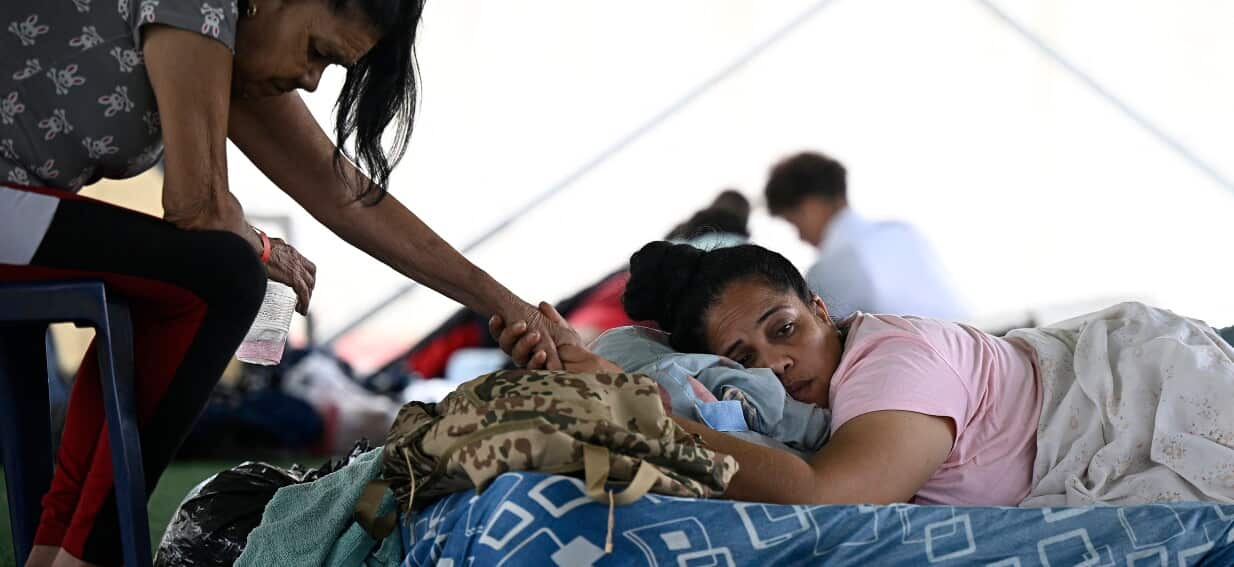
The ground zero of Venezuela’s recent seismic upheaval is a landscape of unimaginable devastation. A week on from the catastrophic tremors, entire towns lie in ruins, their former vibrancy replaced by a grim tableau of twisted metal, shattered concrete, and the haunting silence that only widespread destruction can bring. Yet, amidst this profound despair, a singular, inexplicable missed call has become a beacon for desperate families, fuelling their steadfast belief that life, however improbable, might still persist beneath the colossal debris.
The Faint Echo of a Ring
For many, the initial shock of the earthquakes has given way to a grinding, unbearable wait. Search and rescue efforts, initially frantic, are now slowing, transitioning into a grim recovery operation. However, for a select few, the relentless sifting through wreckage is infused with a fresh, agonising hope. SBS News Top Stories reported on the extraordinary phenomenon of families clinging to mobile phone signals – or even a single, unexplained missed call – as potential indicators of survival. It’s a testament to the human spirit's refusal to surrender, finding meaning and motivation in the faintest of echoes from the buried. Each faint ring, each inexplicable vibration, resonates not just as an electronic pulse, but as a thumping beat of hope in the chest of those who still stand vigil.
Mounting Anger and Slow Response
While personal tragedies unfold in isolation, a broader narrative of frustration and anger is beginning to coalesce across the quake-affected regions. The initial government response, say many survivors and local aid workers, has been woefully inadequate. Critical resources such as heavy machinery, specialist search teams, and medical supplies were reportedly slow to arrive, hindering early rescue efforts when the chances of finding survivors were highest. This perceived delay has not only exacerbated suffering but also eroded public trust, with questions now being asked about the nation's preparedness for such a large-scale natural disaster. The financial cost of reconstruction is already projected to be in the tens of billions of Australian dollars, a staggering sum for a nation already grappling with significant economic challenges.
Desperate Measures for Desperate Times
In the absence of a robust official response, communities have mobilised. Ordinary citizens, often with little more than their bare hands or basic tools, are sifting through the rubble in desperate attempts to locate loved ones. Makeshift first aid stations have sprung up, staffed by volunteers providing what comfort and medical attention they can. This grassroots endeavour, while heroic, underscores the severe lack of centralised, coordinated relief. Water, food, and shelter are becoming increasingly scarce, pushing already vulnerable populations to the brink. The international community has pledged support, but the logistical challenges of delivering aid into a country with complex geopolitical dynamics remain significant.
A Nation Reeling, A People Resilient
The full human and economic toll of Venezuela's earthquakes is yet to be tallied, but it will undoubtedly be immense. Beyond the structural damage, the psychological scars will endure for generations. Yet, even in the shadow of such overwhelming loss, stories of resilience and indomitable hope continue to emerge. The missed call, a seemingly insignificant digital blip, serves as a powerful metaphor for the unwavering human capacity to search for light in the darkest corners. As the days turn into weeks, and the initial shock gives way to the arduous task of rebuilding, the world watches to see how Venezuela, and its people, will navigate this profound moment of crisis.