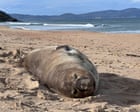
Neil, a southern elephant seal born in Tasmania in October 2020, is not your average local. Most of his kind reside thousands of kilometres south on the remote subantarctic Macquarie and Heard islands. Yet, Neil has chosen Tasmania for his regular visits to moult, breed, or, as locals have observed, simply rest and perfect his playful sparring moves.
His unusual presence has catapulted him to an unexpected celebrity status, particularly on social media. Videos of Neil lumbering across roads, playfully “attacking” traffic cones, and interacting with beachgoers have garnered millions of views, turning him into a global sensation and an unofficial mascot for Tasmania. However, this fame comes with a dangerous downside, according to wildlife authorities.
A Perilous Popularity Contest
Wildlife officials are increasingly concerned about the public's behaviour around the 2.5-metre-long, approximately 1,000kg marine mammal. The Guardian Australia reported that some individuals have approached dangerously close, even bringing human babies within metres of the giant pinniped for a photo opportunity. This disregard for safety has prompted serious warnings from the Department of Natural Resources and Environment Tasmania (NRE Tas).
“While Neil’s antics are undeniably captivating, people are getting too close,” a spokesperson for NRE Tas stated, highlighting the potential for serious injury. “Elephant seals are wild animals. Despite their seemingly docile nature, they can move incredibly fast and their bites are immensely powerful. A fully grown male like Neil could inflict life-threatening injuries in an instant if he felt threatened.”
The Double-Edged Sword of 'Neil Mania’
Experts describe Neil’s fame as a “double-edged sword.” On one hand, it raises public awareness about unique marine wildlife and Tasmania’s biodiversity. On the other, the uncontrolled close encounters pose a significant risk to both the public and Neil himself. Dr. Rachel Smith, a marine biologist from the University of Tasmania, expressed her concerns: “The more comfortable Neil becomes with human proximity, the greater the likelihood of a negative interaction. This isn’t just about human safety; it’s about Neil’s welfare too.”
NRE Tas has issued clear guidelines: maintain a distance of at least 20 metres from seals on land and 80 metres when in the water. Disrupting their natural behaviour, such as resting or moulting, can cause immense stress and negatively impact their health. “We understand the excitement, but we need the public to respect these guidelines,” the NRE Tas spokesperson urged.
The Unthinkable Alternative
The most alarming aspect of this situation is the potential for a tragic outcome. Wildlife officials have starkly warned that if public behaviour escalates to a point where Neil becomes a consistent danger to humans, or if he is repeatedly harassed and his natural instincts are severely compromised, euthanasia could become a last resort. “No one wants to see that happen,” commented a wildlife official anonymously to The Guardian Australia, “but when large, potentially dangerous animals are involved, and public safety is repeatedly jeopardised, difficult decisions sometimes have to be made.”
This grim warning serves as a sobering reminder that while Neil may be a local celebrity, he is first and foremost a powerful wild animal deserving of space and respect. The onus is now on the public to ensure that their enthusiasm for Neil doesn't inadvertently lead to his demise. The price of a perfect selfie, in this case, could ultimately be Neil’s life.