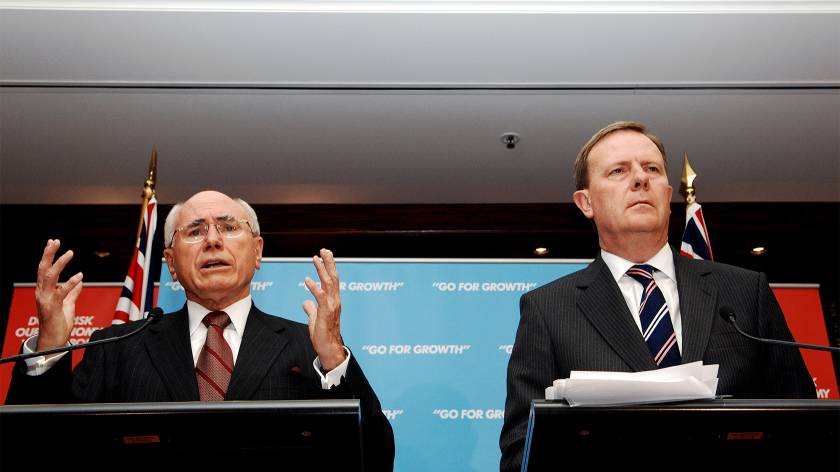
A notorious private dinner nearly two decades ago between Peter Costello and senior journalists continues to cast a long shadow over Australian political journalism and national broadcaster guidelines, independent outlet Crikey reported.
An explosive off-the-record encounter
The episode, retrospectively dubbed "Dinnergate", unfolded in mid-2005 against the backdrop of an increasingly tense power-sharing arrangement between then prime minister John Howard and his ambitious federal treasurer. Over a private meal with three prominent journalists, Mr Costello reportedly gave candid voice to his mounting frustrations, declaring of his leader: "He can’t win. I can."
According to the account revisited by Crikey, the remarks were an explicit indication that the treasurer was preparing to move against Mr Howard to secure the nation’s top office. Yet when details of the dinner inevitably surfaced in the public arena, the fallout was instantaneous and venomous. Mr Costello flatly denied the claims, insisting the exchange had never taken place in the terms described.
The broadcaster under siege
The public denial placed the Australian Broadcasting Corporation in an extraordinarily precarious position. With ABC figures among those present at the table, the dispute rapidly transformed from an internal Coalition squabble into a high-stakes institutional war between the federal government and the public broadcaster.
At the time, the Howard ministry was already waging a sustained campaign against perceived bias within the ABC, subjecting its newsrooms to intense scrutiny and formal complaints. Mr Costello’s forceful rebuttal weaponised these tensions, leaving the broadcaster vulnerable to accusations of amateurism and political sabotage. Without on-the-record attribution, journalists were forced to defend their professional integrity while shielding the mechanics of their sourcing.
Rewriting editorial boundaries
The bitter confrontation ultimately forced the ABC to reassess its internal operating procedures. Crikey reported that the institutional scars from the dispute hastened an overhaul of the broadcaster's editorial policies regarding background briefings, source confidentiality, and note-taking standards.
Editorial executives recognised that informal, off-the-record arrangements with senior politicians carried catastrophic risks if a source chose to disown their statements. In the years following the stoush, the national broadcaster codified stricter protocols governing how journalists document off-the-record interactions, demanding greater contemporaneous verification before claims could be broadcast or referenced internally.
The enduring legacy of ‘Dinnergate’
Today, the reverberations of Dinnergate extend well beyond the careers of Mr Howard and Mr Costello. The affair dealt a lasting blow to the clubby, informal conventions that had long characterised relations between federal parliamentarians and the Canberra press gallery.
By demonstrating how quickly a background briefing could degenerate into an existential crisis, the 2005 stoush accelerated a more defensive, legally cautious approach across Australian newsrooms. Decades on, the lessons drawn from Mr Costello's dinner table remain embedded in the ABC's institutional memory, serving as a cautionary tale on the perils of relying on gentlemen's agreements in the cutthroat arena of national politics.