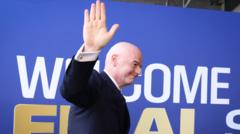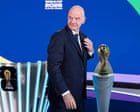
The walls are closing in on FIFA President Gianni Infantino as his ambitious, and highly contentious, plan to sell off portions of the World Cup to private investors faces mounting global opposition and an internal revolt.
Infantino’s proposal, which would see significant chunks of football’s most prestigious tournament handed over to external entities, has been met with fierce resistance, particularly from European football federations who have threatened to boycott FIFA competitions should the scheme proceed. However, the most recent blow to his presidency came last Friday, when a senior adviser resigned and FIFA’s own chief operating officer issued a scathing rebuke, signaling a potential collapse of support from within his inner circle.
Internal Uproar Over Privatisation
The dramatic developments began with the resignation of Fatma Samoura, a key figure in Infantino’s inner circle and one of his most trusted advisers. While the specifics of her departure remain under wraps, Guardian Australia Sport reported that her exit is directly linked to the widespread disdain for the World Cup privatisation strategy. This resignation sent shockwaves through the organisation, highlighting the profound divisions Infantino's vision has created at the highest levels of global football governance.
Further compounding Infantino’s woes, Philippe Le Floc’h, FIFA’s chief operating officer, publicly condemned the plan, stating it “defies belief and imagination.” Such a strong and open denunciation from a high-ranking executive within FIFA is unprecedented and underscores the profound internal dissent that Infantino is now grappling with. The combined loss of a senior adviser and the public rebuke from a key operational figure casts a long shadow over the future viability of Infantino's leadership and his controversial reforms.
European Boycott Threats Escalate
European football associations, including powerful federations like Germany, England, and France, have been particularly vocal in their opposition to the privatisation scheme. Their primary concern revolves around the potential commercialisation and dilution of the World Cup’s prestige, arguing that it would compromise the sport’s integrity and core values. These federations have explicitly warned that they would boycott future FIFA tournaments if Infantino pushes ahead with his plans. Such a boycott would not only be a monumental financial blow to FIFA, potentially costing hundreds of millions of Australian dollars in broadcast rights and sponsorship, but would also severely undermine the legitimacy of any competition held without Europe’s leading footballing nations.
Unpacking the Financial Stakes
At the heart of Infantino’s proposal is a desire to unlock new revenue streams for FIFA, reportedly driven by a desire to fund ambitious new competitions and development programs. The plan involves selling commercial rights and potentially even stakes in future World Cups to private investment consortiums. While proponents argue this could inject billions into the sport, critics contend it risks handing over control of football's crown jewel to external interests, prioritising profit over tradition and sporting merit. The potential long-term implications for the World Cup brand, and FIFA’s independence, are a major point of contention.
A Presidency on the Brink?
Infantino’s tenure has been marked by a series of ambitious, and often controversial, reforms since he took office in 2016 in the wake of the corruption scandal that engulfed his predecessor, Sepp Blatter. However, the current backlash over the World Cup sell-off, coupled with the high-profile resignations and rebukes, represents arguably the most significant challenge to his authority yet. The pressure on Infantino is now immense, and his ability to salvage his presidency will depend on his capacity to navigate this growing storm, potentially by shelving the contentious privatisation plan entirely. Failure to do so could lead to further departures and an unprecedented revolt that could see him follow in the footsteps of previous FIFA leaders embroiled in scandal and controversy.