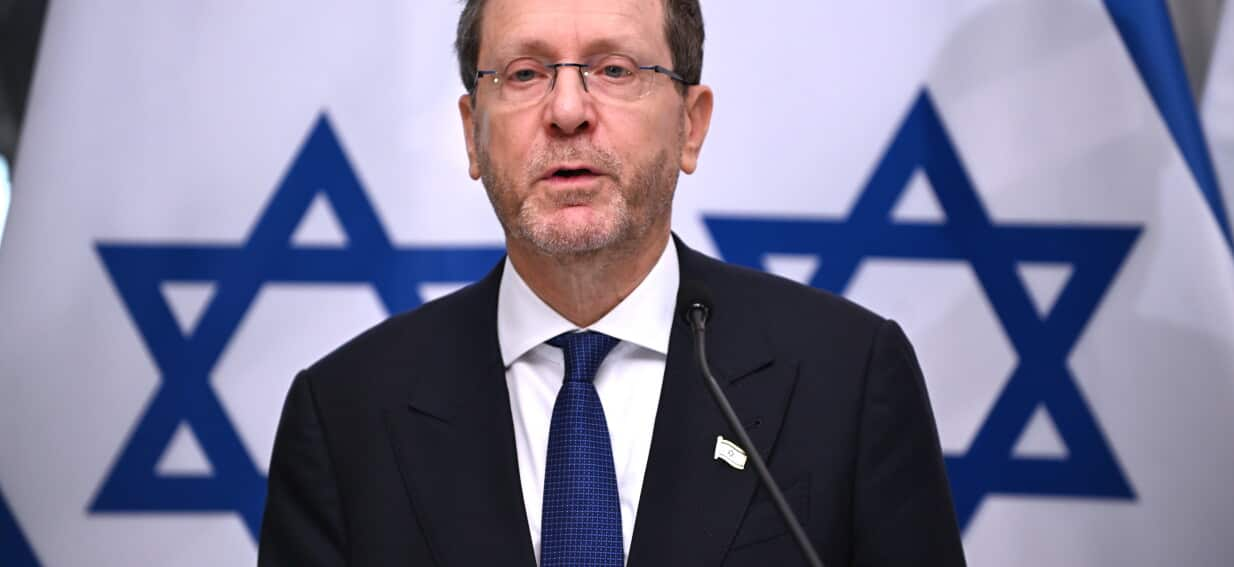
Israeli President Isaac Herzog will launch critical cross-party consultations this week, navigating a deeply fragmented parliament in an urgent bid to broker a viable governing coalition following an inconclusive national election.
Under ordinary conventions, the head of state's constitutional obligation following a general ballot is largely ceremonial, requiring swift consultations before formally inviting the most viable candidate to assemble an executive. However, with no singular bloc securing a decisive mandate in the 120-seat Knesset, SBS News Top Stories reported that the presidency faces an acutely intricate political challenge.
Mandate to govern hangs on razor-thin margins
Under Israeli electoral mechanics, an aspiring prime minister must command the confidence of at least 61 parliamentarians to form an administration. As party delegations prepare to present their recommendations at the presidential residence in Jerusalem, negotiations are expected to turn on minor parties and ideologically divergent crossbench factions whose allegiances remain volatile.
The president is granted an initial consultation period to canvass the views of all elected parliamentary factions before designating a prospective prime minister. The chosen lawmaker is subsequently afforded four weeks, with a possible two-week extension, to conclude policy pacts and allocate ministerial portfolios. If those negotiations falter, the mandate may be reassigned to a rival parliamentary leader or returned directly to the Knesset, raising the specter of a prolonged executive vacuum.
Complex arithmetic inside a divided Knesset
Israel's pure proportional representation system has repeatedly produced fractured legislatures, precipitating a cycle of repeated ballots that has severely tested institutional stability and voter patience. Observers note that deep ideological polarisation across security policies, judicial authority, and secular-religious divides has made sustainable cross-bench cooperation increasingly elusive.
While traditional conservative alliances remain central to right-aligned permutations, conflicting demands between ultra-Orthodox groupings, nationalist hardliners, and more moderate factions present substantial hurdles. Conversely, centrist and progressive groupings, alongside Arab-led parties, present an equally convoluted mathematical puzzle for anyone attempting to construct an alternative ruling alliance.
High stakes for Middle Eastern stability
The impending negotiations carry implications extending well beyond domestic policy. Canberra and international partners are watching the outcome closely, mindful that the ultimate composition of Israel's next ministry will heavily influence diplomatic engagement across the Middle East, ongoing regional security arrangements, and unresolved matters concerning the Palestinian territories.
Diplomatic analysts warn that protracted legislative paralysis or an unstable, fragile coalition could compromise policy coherence during a period of acute geopolitical sensitivity. For President Herzog, the constitutional burden of identifying a candidate capable of commanding a durable parliamentary majority represents one of the most critical tests of his tenure.