The football world is mourning the passing of Kevin Keegan, a colossus of the game whose remarkable career as a player and manager frequently saw him transcend the sport itself. Keegan, who has died aged 75, leaves behind a legacy defined by extraordinary achievement, yet, as he himself would ruefully note, often distilled into a singular, emotional moment.
A pioneer and a superstar, Keegan holds the unique distinction of being the only British player to have won the coveted Ballon d'Or award twice, a testament to his incandescent talent. He was the dazzling star of Liverpool's inaugural European Cup-winning side, a pivotal figure in one of English football's most dominant eras. Later, he became a revered, almost messianic presence at Newcastle United, both as a player and, most famously, as a manager, forging a team so captivating it drew commendation from the head of FIFA.
His influence wasn't limited to club football; Keegan also captained and subsequently managed the England men's national team, embodying the hopes and dreams of a nation. But for many, especially those who came of age in the Premier League era, Keegan's name conjures images not of gilded trophies or audacious goals, but of a heated touchline interview in April 1996.
The Rant Heard Around the World
Keegan's impassioned "I'd love it" rant, directed squarely at then-Manchester United manager Sir Alex Ferguson, became an instant cultural touchstone. Guardian Australia Sport reported that this electrifying moment, a spontaneous eruption of emotion, effectively became a 'meme' before the term and the digital landscape that fosters such phenomena even existed. Replayed incessantly on Sky Sports and etched into the minds of multiple generations, it frequently tops polls as the most memorable moment in Premier League history.
This raw, unfiltered outburst, which foreshadowed an era where viral clips and personality-driven narratives would come to dominate football coverage, regrettably overshadowed the depth of Keegan's contributions. It was, as many football historians agree, a lightning rod for the coming commercialisation and media intensity of the modern game, marking a shift in how coaches and players interacted with the burgeoning sports media.
A Star's Rise to Prominence
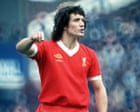
Born in Doncaster, England, Keegan's playing career took off at Scunthorpe United before a move to Liverpool in 1971. It was at Anfield that he truly flourished, becoming a talismanic figure and winning three First Division titles, the FA Cup, two UEFA Cups, and the aforementioned European Cup. His fearless attacking play and iconic perm made him instantly recognisable and adored by fans.
After a successful stint in Germany with Hamburg SV, where he won two Ballon d'Or awards in 1978 and 1979, Keegan returned to England with Southampton and then Newcastle United, where his arrival sparked a new wave of excitement. His transition to management saw him lead Newcastle to the brink of a historic Premier League title, creating a team renowned for its attacking verve, even if that particular dream ultimately slipped through their grasp following that infamous rant.
A Legacy Beyond One Moment
While the "I'd love it" soundbite remains indelible, it should not – and for true football aficionados, does not – obscure the monumental achievements of Kevin Keegan. He was a player of immense skill, a leader of undeniable charisma, and a manager who dared to entertain. His influence permeated British football for decades, inspiring countless young players and captivating millions of fans with his passion and commitment.
Beyond one televised outburst, Kevin Keegan's legacy is one of a true footballing icon, a man who consistently pushed boundaries and left an indelible mark on the beautiful game, both on and off the pitch. His death marks the loss of a genuine legend whose extraordinary career, filled with triumphs and trailblazing moments, deserves to be remembered in its entirety.