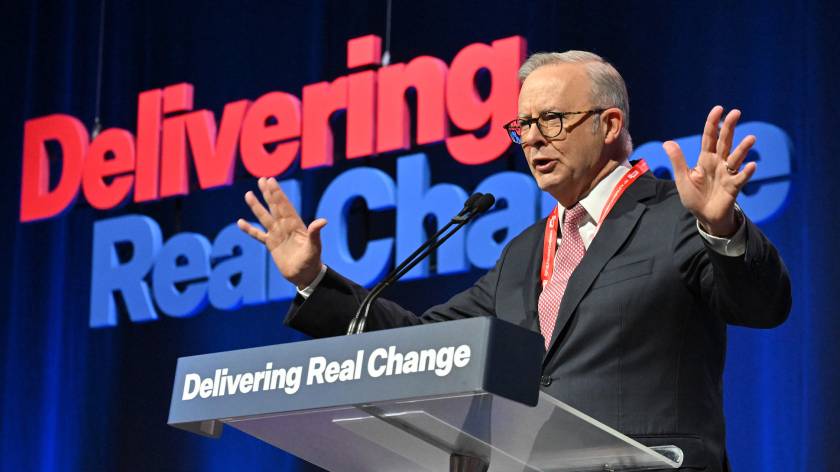
A groundswell of discontent regarding the AUKUS defence agreement is reportedly festering within the Australian Labor Party's grassroots, but a calculated strategy by party headquarters has ensured this dissent remains largely unheard, according to recent analysis from Crikey.
The online publication suggested that Labor's firm control over internal narratives allowed the party to navigate its national conference without the customary public airing of factional grievances or alternative policy proposals, particularly concerning the contentious AUKUS deal.
Suppressing the Voices from Below
Crikey’s reporting highlights a deliberate effort by Labor's leadership to manage and, effectively, neutralise internal opposition to the AUKUS agreement. This approach, while ensuring a smooth public face during significant party gatherings, has sparked concerns among some members and observers about the health of internal party democracy. Critics argue that by meticulously controlling the agenda and the messaging, Labor HQ has bypassed genuine debate that could otherwise lead to innovative ideas or a recalibration of national policy based on member sentiment.
The AUKUS pact, which commits Australia to acquiring nuclear-powered submarines, has been a source of considerable debate since its inception. While the government has consistently championed the agreement as vital for national security in the Indo-Pacific, a segment of the party's membership, particularly those with a strong anti-nuclear or disarmament stance, views it with apprehension. Their concerns range from the financial implications – estimated to run into hundreds of billions of Australian dollars – to the geopolitical ramifications and Australia's perceived alignment with US foreign policy objectives.
A Conference Without Controversy
The recent national conference, typically a forum for robust debate and policy formulation, passed with an unusual lack of open contention on major issues such as AUKUS. Crikey noted that this absence of drama was not indicative of universal approval, but rather a testament to the efficacy of the party's internal management strategies. This has led to questions about whether the party is truly representative of its diverse membership base when significant policy disagreements are not afforded a platform for discussion or resolution.
Historically, Labor conferences have been vibrant, if sometimes fractious, showcases of the party's internal democratic processes, allowing various factions and interest groups to champion their causes. The perceived quietude around AUKUS at the latest conference, therefore, stands out as a stark contrast, suggesting a shift towards a more centralised and controlled political narrative.
The Cost of Unity: Stifled Ideas?
The suppression of grassroots dissent, while presenting a unified front, may come at a long-term cost to the Labor Party. Critics contend that by closing off avenues for internal debate, the party risks becoming insular and less responsive to evolving challenges and member concerns. A robust internal democracy is often seen as a crucible for new ideas and a mechanism for testing policy robustness before it is presented to the wider electorate. Without such a mechanism, there's a risk of groupthink and a disconnect between the party's leadership and its foundational support.
The Crikey analysis implies that while the strategy successfully averted public divisions, it may have inadvertently stifled the very processes that could inject fresh perspectives and innovative policy solutions into the party's platform. For a broadsheet like the Sydney Daily News, the implications of such internal control are significant, potentially shaping the future direction of a major political party and, by extension, the nation's policy landscape.