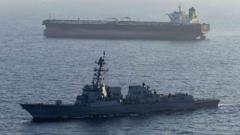
Tensions in the Middle East have escalated dramatically following explosive claims by the United States that Iran's Islamic Revolutionary Guard Corps (IRGC) unleashed unannounced ballistic missile attacks. The allegations, reported by Al Jazeera, paint a grim picture of a region bracing for potential conflict, with Saudi Arabia simultaneously intercepting drones believed to be launched by Iranian-backed proxies and Tehran issuing stark warnings over its control of the Strait of Hormuz.
The White House's assertion of unprovoked missile strikes by Iran has sent shockwaves through international diplomatic circles. While specific targets and damage remain unconfirmed, the accusation marks a significant hardening of rhetoric and suggests a dangerous new phase in the long-standing animosity between Washington and Tehran. This development comes as Australia, a key US ally, continues to monitor the volatile situation, with potential implications for global trade and energy prices.
Saudi Air Defences Intercept Drones
Adding to the instability, Saudi Arabian air defence systems have successfully intercepted multiple drones, preventing potential attacks on critical infrastructure. While Riyadh has not definitively attributed the drone launches, such incidents are frequently linked to Iran-backed Houthi rebels in Yemen, who have previously targeted Saudi oil facilities and airports. The simultaneous nature of these events with the US missile allegations points to a coordinated or at least highly volatile regional environment. Analysts suggest these drone incursions serve as a reminder of the broad array of asymmetric warfare tools at Iran’s disposal, further complicating any potential de-escalation efforts.
Iran's Ultimatum on Hormuz
Compounding the crisis, Iran has issued a stern warning that it will take "any action" necessary to maintain its control over the Strait of Hormuz. This vital waterway, through which approximately 20 per cent of the world's oil transits daily, has long been a flashpoint. Tehran's insistence on its right to control access to the strait is a direct challenge to international maritime law and could have profound economic consequences globally. A disruption to shipping through Hormuz would send oil prices skyrocketing, impacting Australian households and businesses already grappling with cost-of-living pressures. The rhetoric from Tehran underscores a readiness to defend what it perceives as its sovereign rights, even if it means confronting international naval forces present in the Gulf.
Regional Brinkmanship and Global Fallout
The current climate of accusation and warning signifies a dangerous period of brinkmanship in the Persian Gulf. The US claims of IRGC missile activity, coupled with regional drone attacks and Iran's defiant stance on Hormuz, create a highly combustible situation. While immediate diplomatic solutions appear elusive, international efforts are intensifying behind the scenes to prevent a full-scale military conflict that could destabilise the entire region and have severe global ramifications, affecting everything from energy markets to supply chains.
The Australian government has urged all parties to exercise restraint and de-escalate tensions, noting the critical importance of stability in the Middle East for global economic security. The potential for miscalculation in such a charged environment remains a paramount concern, as a single incident could trigger a cascading series of events with unpredictable outcomes. The coming days will be crucial in determining whether diplomacy can avert a wider conflict or if the region is destined for further confrontation.