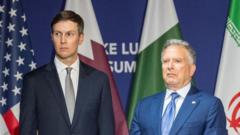
DOHA – The simmering geopolitical pot of the Middle East is once again threatening to boil over, with the Qatari capital of Doha emerging as a discreet, yet unlikely, venue for ongoing, opaque discussions between the United States and Iran. While Washington remains tight-lipped, and Tehran downplays the significance, these supposed talks come as both nations grapple with heightened regional instability and a persistent stalemate over crippling economic sanctions.
The prospect of direct engagement, however limited, offers a glimmer of hope amidst a landscape of distrust and proxy conflicts. Former US President Donald Trump recently fueled speculation, asserting on his social media platform that Iran was "desperate to meet with the US in Qatar." This claim, made without further elaboration, was swiftly and firmly rebuffed by Iranian officials.
Tehran Downplays, Washington Unresponsive
Iranian state media quickly countered Trump's assertion, framing any delegation to Doha as solely focused on the release of billions of dollars in frozen Iranian assets, primarily held in South Korea and Japan due to US sanctions. "Our delegation is in Doha to discuss the unfreezing of our funds," an anonymous Iranian official was quoted as saying, effectively dismissing broader political negotiations.
However, Al Jazeera, a widely respected international news outlet based in Qatar, reported earlier this week that discussions extended beyond merely financial matters. While specific details remain scarce, the reports suggest a broader agenda, potentially including de-escalation strategies and avenues for reopening communication channels that have largely been severed since the US withdrawal from the Joint Comprehensive Plan of Action (JCPOA), or Iran nuclear deal, in 2018.
The Lingering Spectre of Sanctions
The core of the US-Iran impasse continues to be the stringent economic sanctions imposed by Washington, which have severely crippled Iran's economy and its ability to trade internationally. Tehran has consistently demanded the lifting of these sanctions as a prerequisite for any meaningful return to the nuclear deal or broader diplomatic engagement. The frozen assets, estimated to be in the order of AUD$10 billion, represent a crucial point of contention, with Iran viewing their release as an urgent humanitarian and economic necessity.
Washington, on the other hand, maintains that sanctions pressure is a vital tool to curb Iran's nuclear ambitions, ballistic missile program, and its support for regional proxy groups. The Biden administration has, to date, shown little willingness to unilaterally lift sanctions without significant concessions from Tehran regarding its nuclear program and regional behaviour.
A Fragile Path Forward?
While the current talks in Doha remain shrouded in secrecy and conflicting narratives, the very act of US and Iranian representatives being in the same city, even if ostensibly for different reasons, marks a significant development. Previous attempts at indirect negotiations, often mediated by European nations, have yielded limited results, leaving a void that Qatar now appears somewhat willing to fill.
The outcome of these discussions, if indeed they are more extensive than Iran admits, could have profound implications for regional stability, global oil markets, and the future of the highly contentious Iranian nuclear program. For now, the world watches Doha, keen for any indication that a fragile path towards de-escalation, however incremental, might be emerging from the shadows of long-standing animosity.
Regional Anxiety and Global Stakes
Beyond the immediate participants, regional neighbours and global powers are closely observing the unfolding events in Doha. Saudi Arabia and Israel, key US allies, have long voiced concerns over Iran's regional influence and nuclear program. Any perceived softening of the US stance without substantial Iranian concessions would undoubtedly raise alarm bells in Riyadh and Jerusalem.
Globally, the implications are equally significant. A potential de-escalation, even minor, could reduce risks to shipping in vital waterways, ease pressures on oil prices, and perhaps pave the way for a renewed focus on broader regional challenges. Conversely, a failure to find common ground risks exacerbating a volatile situation, pushing the region closer to direct conflict and further entrenching the current stalemate, with economic repercussions felt far beyond the Middle East.