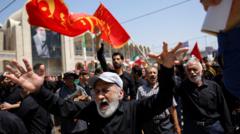
TEHRAN: An estimated several million Iranians have poured onto the streets of Tehran, transforming the capital into a sprawling tableau of grief as the funeral rites for Ayatollah Ali Khamenei commence. The Supreme Leader's passing has triggered an outpouring of emotion, with state media broadcasting continuous coverage of the somber spectacle and citizens visibly distraught by the loss of the cleric who guided the Islamic Republic for decades.
Khamenei’s body will lie in state at Tehran’s Grand Mosalla until Monday, allowing an immense number of mourners to pay their final respects. The sheer scale of the gathering is a powerful indicator of the reverence Khamenei commanded within Iran and among his followers.
Unprecedented Farewell Journey
Following the Tehran ceremonies, Khamenei's remains are scheduled for an extraordinary journey across the nation, then into neighbouring Iraq, a path designed to allow maximum participation in the mourning process. This multi-city procession is unprecedented in its scope, reflecting the deeply intertwined religious and political significance of the late leader.
Details of the exact route and additional stops are being drip-fed by state media, but it is anticipated that cities such as Qom, a spiritual heartland of Shiite Islam, and Mashhad, home to the Imam Reza shrine, will be focal points for further public mourning. The extension of the funeral to Iraq further highlights Khamenei's regional sway, particularly among Shiite communities, and solidifies his legacy beyond Iran's borders. Mourners are expected to line motorways and public squares for days, creating a continuous chain of remembrance.
A Nation United in Grief
The meticulously organised, yet emotionally charged, events are a testament to the ideological and structural solidity of the Islamic Republic, even in the face of such a monumental leadership transition. The succession process, which has been the subject of intense speculation for years, is understood to be under way, though no official announcement has yet been made regarding Khamenei's successor. Analysts suggest the seamless progression of the funeral rituals aims to project an image of stability and continuity during this critical period.
Access to Tehran has been heavily restricted, with numerous road closures and enhanced security measures in place. Public transport is reportedly operating at maximum capacity, ferrying mourners from all corners of the country to the capital. Schools and government offices have been closed for the mourning period, allowing citizens to participate fully in the national commemoration.
Regional Reverberations and Global Attention
The passing of Ayatollah Khamenei has sent ripples across the Middle East and garnered significant international attention. BBC World reported that leaders from various regional groups and nations, including prominent figures from Hezbollah in Lebanon and various Iraqi Shiite militias, are expected to attend various stages of the funeral. Their presence underscores the extensive network of alliances and influence Khamenei cultivated throughout his long tenure.
Globally, reactions have been a mix of condolences and cautious observation, with many nations closely monitoring the transition of power in a country of such strategic importance. Australian officials, while yet to issue a formal statement on the funeral, are understood to be keeping a close watch on developments, particularly concerning potential impacts on regional stability and international relations. The elaborate funeral procession, and the unified public response, serves as a powerful display of the Islamic Republic's enduring strength and its profound impact on a profoundly complex region.