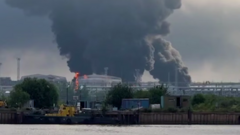
NABATIEH, LEBANON – Residents of Nabatieh, a historic town in southern Lebanon, are now confronting the daunting task of piecing their lives back together following weeks of intense cross-border hostilities. With buildings reduced to rubble and critical infrastructure severely damaged, the community’s resilience is being tested against a backdrop of persistent regional instability.
Al Jazeera reported that the recovery effort in Nabatieh has commenced, focusing on clearing debris and assessing the extensive damage. The scale of destruction is significant, with homes, shops, and public facilities bearing the scars of recent bombardments. For a town deeply embedded in the cultural and economic fabric of southern Lebanon, the road to full recovery promises to be long and arduous, demanding both substantial financial aid and an enduring sense of hope from its beleaguered populace.
A Community Under Duress
The human toll of the conflict is palpable. Thousands have been displaced from their homes, seeking refuge in safer areas further north, with many still uncertain about the future of their properties and livelihoods. Those who remain are faced with a myriad of challenges, from finding basic necessities to navigating the psychological impact of living under constant threat. According to local aid organisations, the immediate priority is providing humanitarian assistance, including food, shelter, and medical supplies, to the most vulnerable members of the community.
The economic ramifications for Nabatieh are profound. The town, once a vibrant hub of commerce and agriculture, has seen its markets shuttered and its agricultural lands, a critical source of income, left untended or damaged. The disruption to daily life extends beyond the immediate destruction, impacting supply chains and hindering the ability of businesses to operate even at a reduced capacity. The cumulative effect is a sharp downturn in economic activity, further exacerbating the hardships faced by families already struggling to cope.
Unseen Costs of Cross-Border Tensions
The ongoing tensions along the Lebanese-Israeli border cast a long shadow over Nabatieh's recovery efforts. While residents bravely begin the rebuild, the lingering threat of renewed violence creates an environment of anxiety and uncertainty. The geopolitical landscape remains volatile, with regional actors engaged in a dangerous tit-for-tat, making any long-term planning for reconstruction a precarious endeavour. The psychological strain on the community is immense, as the spectre of future escalation looms large, hindering people's ability to truly move forward.
International bodies and non-governmental organisations have begun to pledge support for the reconstruction of southern Lebanon. However, the exact mechanisms and timing of this aid remain contingent on the evolving security situation. For communities like Nabatieh, swift and sustained financial assistance will be crucial. An estimated AUD$50 million alone could be required for initial emergency repairs and humanitarian relief across the affected regions, a figure that pales in comparison to the projected costs of full-scale reconstruction. The Australian government has historically contributed to humanitarian efforts in the Middle East, and further support may be required given the scale of the unfolding crisis.
The Path Ahead: Resilience and Uncertainty
Despite the overwhelming challenges, a spirit of defiance and determination is evident among Nabatieh's residents. Community leaders are working tirelessly to coordinate efforts, mobilise volunteers, and advocate for greater assistance from both the Lebanese government and international partners. The task of rebuilding is not merely about bricks and mortar; it is about restoring hope, rekindling economic vitality, and ensuring the continued cultural legacy of this historically significant town.
However, the path ahead remains fraught with uncertainty. The fragile ceasefire holds precariously, and unless a more lasting resolution to the broader regional conflict is found, the cycle of destruction and reconstruction in towns like Nabatieh may tragically continue. The world watches on as this resilient Lebanese community endeavours to rise from the rubble, their future inextricably linked to the ebb and flow of Middle Eastern geopolitics.