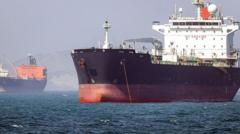
Oil prices plummeted on international markets yesterday amidst growing speculation that negotiations to fully reopen the Strait of Hormuz shipping channel to unimpeded traffic are making significant headway. The potential breakthrough offers a glimmer of hope for stabilising global energy supplies and could translate to tangible benefits for Australian consumers at the petrol pump.
According to reports from BBC World, United States Secretary of State Marco Rubio and Treasury Secretary Scott Bessent both indicated that discussions had progressed positively, suggesting a resolution allowing for the resumption of full shipping activities through the vital chokepoint was within reach. This news sent ripples through commodity markets, with the benchmark Brent crude futures falling sharply by AUD$3.50 to AUD$112.20 a barrel, while West Texas Intermediate (WTI) crude futures dropped AUD$3.20 to AUD$108.50 a barrel.
Global Supply Concerns Easing
The Strait of Hormuz, a narrow passage between the Persian Gulf and the Gulf of Oman, is one of the world's most critical maritime oil chokepoints. An estimated 20 per cent of the world's total petroleum liquids consumption, or about 21 million barrels per day, passes through the Strait. Recent disruptions and geopolitical tensions in the region have kept global oil prices elevated for months, contributing to inflationary pressures worldwide, including in Australia.
The prospect of a stable and unobstructed flow of oil through this strategic waterway would significantly ease anxieties about global supply shortages. Analysts suggest that a sustained reopening could lead to further price corrections in the short to medium term, offering a much-needed reprieve for energy-dependent economies.
Impact on Australian Households
For Australian households, the news comes as a welcome development. Fuel prices have been a major point of contention and financial strain in recent months, with many families grappling with unprecedented costs at the bowser. A sustained drop in international crude oil prices would eventually flow through to local petrol stations, potentially saving motorists hundreds of dollars annually.
Industry experts cautioned that while the news is positive, it might take some weeks for the full impact to be felt by consumers, as existing stock is depleted and new, cheaper shipments arrive. However, the psychological effect on the market is immediate, instilling greater confidence in future supply chains.
Broader Economic Relief
Beyond the direct impact on fuel costs, lower oil prices could provide broader economic relief. Businesses that rely heavily on transport and logistics, such as agricultural producers and manufacturers, stand to benefit from reduced operational costs. This could, in turn, help to alleviate some of the current inflationary pressures impacting the Australian economy and potentially temper the need for further interest rate hikes by the Reserve Bank of Australia.
The global economy has been navigating a complex landscape of supply chain disruptions, geopolitical instability, and rising inflation. The potential resolution in the Strait of Hormuz offers a beacon of stability in an otherwise turbulent environment, providing a boost to business confidence and consumer sentiment globally. While caution remains due to the sensitive nature of international negotiations, the market's reaction clearly indicates the profound significance of this potential diplomatic breakthrough.