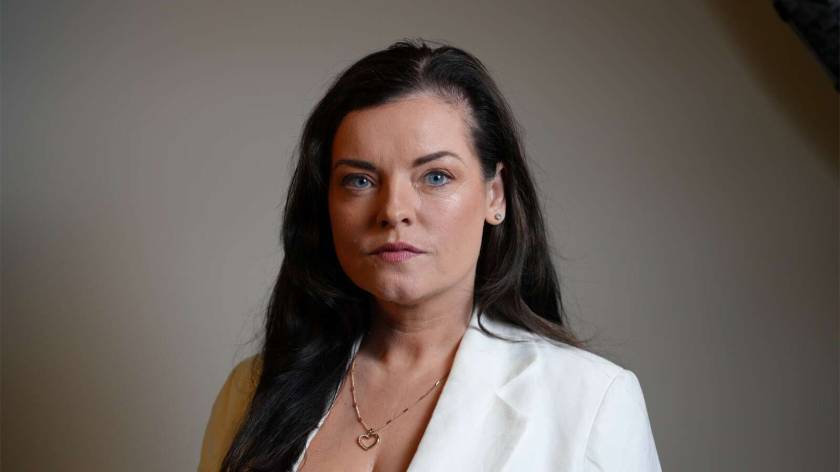
As Victoria edges towards its next electoral contest, One Nation’s solitary state parliamentarian, Rikkie-Lee Tyrrell, faces scrutiny over whether her low-key crossbench tenure has consolidated the party’s precarious southern foothold.
Elected to represent the expansive Northern Victoria Region in the Legislative Council, Tyrrell arrived at Spring Street bearing the banner of a political party historically viewed with scepticism in Victoria. While Pauline Hanson’s movement has long enjoyed sustained pockets of support across regional Queensland and parts of New South Wales, its southern operations have historically struggled to secure enduring parliamentary representation.
A low-volume presence in Spring Street
Unlike the combative, national media-driven approach traditionally favoured by her federal colleagues, Tyrrell has cultivated an uncharacteristically understated parliamentary posture. An assessment by independent outlet Crikey reported that her past term has been defined less by ideological grievance and more by the quiet routines of regional committee work and constituent advocacy.
Observers note that this restrained profile has served a deliberate purpose. In a jurisdiction where fiery populist rhetoric often alienates moderate voters, Tyrrell has avoided inflammatory public controversies, opting instead to present a conventional, approachable face for a party frequently characterised by polarization.
Navigating the Hanson brand in regional Victoria
Drawing on her background in the Goulburn Valley dairy sector, Tyrrell’s policy interventions have consistently focused on agrarian bread-and-butter matters. Crikey reported that her primary legislative contributions have centred on irrigation rights, Murray-Darling Basin plan impacts, regional road conditions, and the preservation of native timber harvesting.
This distinct localism has enabled her to navigate the inherent tensions of her party’s brand. Where Hanson’s interventions often target national cultural battlegrounds, Tyrrell has tethered herself to primary producer grievances, pitching One Nation as an alternative to the Victorian Nationals rather than simply an anti-establishment protest vehicle.
Legislative pragmatism on the crossbench
In a finely balanced Legislative Council, where the Allan Labor government requires crossbench support to pass contested legislation, minor-party numbers carry considerable weight. According to Crikey, Tyrrell has refused to operate as an automatic blocking vote alongside the Coalition.
Instead, she has occasionally demonstrated a willingness to negotiate directly with the government, parlaying committee votes and debate concessions into commitments for regional services. While she has reliably opposed progressive social reforms and public-sector tax measures, her transactional approach to governance has surprised critics who initially anticipated constant procedural disruption.
The southern expansion challenge
With the upcoming state election poised to test minor-party resilience, One Nation faces a broader strategic reckoning across Victoria. Crikey reported that party officials view the forthcoming poll as an opportunity to expand their upper-house presence beyond a solitary representative, targeting disaffected voters in regional belts and outer-metropolitan growth corridors.
Whether Tyrrell’s quiet, agrarian model can be effectively duplicated across broader Victorian electorates remains open to debate. For now, her seat stands as the party’s sole proof-of-concept in the south—a political experiment that will soon face the definitive judgement of regional ballot boxes.