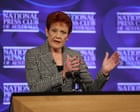
Despite widespread rejection of its core policies and growing apprehension about its leadership, One Nation continues to hold a compelling, if complex, allure for a substantial portion of the Australian electorate. A Guardian Essential poll, released today, indicates that while the party has experienced a marginal two-point dip in support, more than half of respondents remain open to considering Pauline Hanson's party at the upcoming federal election.
The findings present a nuanced picture for political analysts: voters are clearly articulating concerns regarding One Nation’s policy platform and the perceived capacity of its leadership, yet this apprehension does not translate into an outright dismissal of the party's electoral prospects. The poll suggests a deeper undercurrent of dissatisfaction or curiosity that transcends conventional policy alignment.
Policy Rejection Contrasts with Persistent Interest
Australians have unequivocally rejected some of One Nation's most prominent policy proposals, according to Guardian Australian politics. Plans to abolish the Special Broadcasting Service (SBS) and dismantle multiculturalism, for instance, found little favour among those surveyed. These rejections highlight a clear disconnect between some of the party's foundational tenets and the broader public's sentiments.
Yet, this policy repudiation stands in stark contrast to the sustained level of voter interest. The Guardian Essential poll revealed that a remarkable 50% of respondents are either definitely considering or are at least open to voting for One Nation. This figure, though slightly down from previous surveys, underscores a significant bloc of voters who are not being entirely deterred by policy disagreements or leadership concerns. It suggests that One Nation's appeal might lie in areas beyond specific policy minutiae, perhaps tapping into broader frustrations with mainstream political discourse or offering a perceived authentic alternative.
Scrutiny Over Leadership and Competency
The poll also brought to light significant concerns among voters regarding Pauline Hanson's perceived closeness to billionaire mining magnate Gina Rinehart. This association has seemingly raised questions about the party's independence and its alignment with everyday Australian interests. Such high-profile associations can often fuel narratives of influence or perceived elite connections, potentially complicating a party's populist image.
Pertinently, the survey also indicated reservations about One Nation's overall capability to govern the country. Voters are scrutinising the party's practical skills and experience required to manage national affairs. In the complex landscape of federal politics, the ability to demonstrate credible governance is often a critical factor for voters, particularly when considering parties outside the established major players. These concerns about leadership competency and external influence suggest that while One Nation resonates with a segment of the electorate, there are still significant hurdles to overcome in building widespread trust as a viable government-in-waiting.
Implications for the Political Landscape
The enduring, albeit complicated, appeal of One Nation, as revealed by the Guardian Essential poll, carries significant implications for Australia's political landscape. Major parties will be closely watching these trends, seeking to understand the underlying drivers of this persistent support despite clear policy rejections and leadership questions. The challenge lies in addressing the issues that prompt voters to look beyond traditional political offerings, without alienating their own bases.
The poll's findings reinforce the notion that voter behaviour is often driven by a confluence of factors, not solely by policy alignment. For One Nation, maintaining a significant level of support amidst policy repudiation suggests a powerful narrative or identity resonance with its base. As the next federal election draws closer, the dynamics between policy, personality, and perceived authenticity will undoubtedly continue to shape the electoral fortunes of all parties, with One Nation's unique position continuing to demand keen observation from political observers.