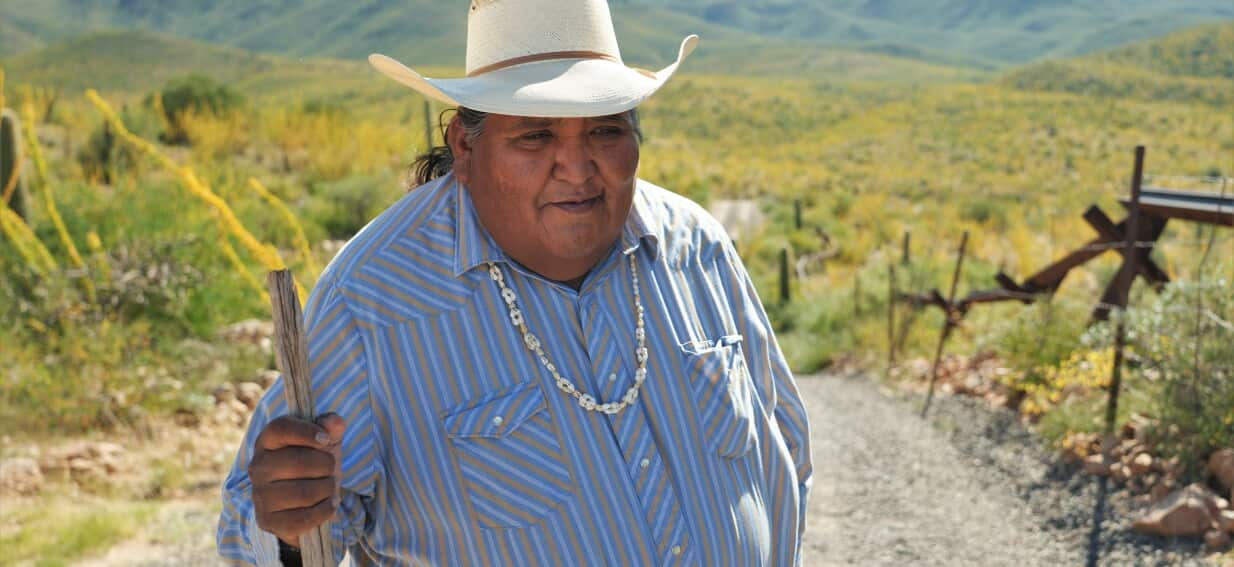
Plans to expand the fortified wall along the United States southern frontier are threatening to sever sacred ancestral lands belonging to the Tohono O'odham nation, sparking renewed resistance from Indigenous custodians.
SBS News Top Stories reported that the proposed reinforcement of physical barriers under Donald Trump’s border agenda cuts through far more than barren desert, bisecting traditional territories that have existed for centuries prior to modern nation-states.
For the Tohono O'odham people, whose reservation in southern Arizona borders Mexico, the land holds sacred burial plots and secluded ceremonial spaces that traditional owners fear could be irreversibly damaged or permanently cut off.
Ancestral geography divided by steel
The Tohono O'odham Nation spans approximately 11,000 square kilometres across the Sonoran Desert, sharing roughly 100 kilometres of international frontier with Mexico. For generations, community members have crossed back and forth to visit relatives, attend traditional ceremonies, and access ancestral grounds in the Mexican state of Sonora.
However, escalating border militarisation over the past two decades has steadily eroded these historic ties. The installation of towering steel bollards, access roads, and high-tech surveillance has effectively cleaved the Indigenous population into two distinct national jurisdictions. As SBS News Top Stories reported, sacred places known only to traditional elders—often deliberately kept secret from external authorities—risk destruction under planned construction corridors.
Cultural heritage in the construction corridor
Under previous border wall initiatives, construction crews blasted through cultural sites, including burial hills and natural desert springs such as Quitobaquito Springs, to lay foundations for heavy bollard fencing. The potential revival of sweeping construction projects, backed by funding packages running into billions of dollars—amounting to tens of billions in Australian currency—has heightened anxieties among traditional custodians.
Tribal representatives have long argued that federal waiver authorities allow contractors to bypass critical environmental and heritage protections, leaving sacred O'odham relics unprotected. Unlike federally recognised reservations, the international boundary strip operates under heightened executive powers, prioritising national security directives over Indigenous cultural preservation.
Environmental fallout across fragile ecosystems
Beyond the cultural impact, the physical barrier severely disrupts the fragile ecology of the Sonoran Desert. Wildlife corridors essential for species such as the endangered Sonoran pronghorn and the desert bighorn sheep have been obstructed, altering migratory routes and fragmenting fragile habitats.
Local hydrology has also been affected, with flash-flood waters regularly dammed by debris collecting along the steel palisades, exacerbating erosion across sacred O'odham lands and threatening centuries-old desert ecosystems.
A protracted struggle for sovereignty
The O'odham struggle reflects a broader clash between Indigenous self-determination and rigid border enforcement policies pursued in Washington. While federal border authorities maintain that reinforced fencing is vital to curbing unauthorised migration and transnational crime, community leaders continue to advocate for alternative technological solutions that respect tribal sovereignty.
For traditional owners, the desert remains an unbroken homeland rather than an international security zone, and any further physical division risks extinguishing spiritual traditions that have endured for millennia.