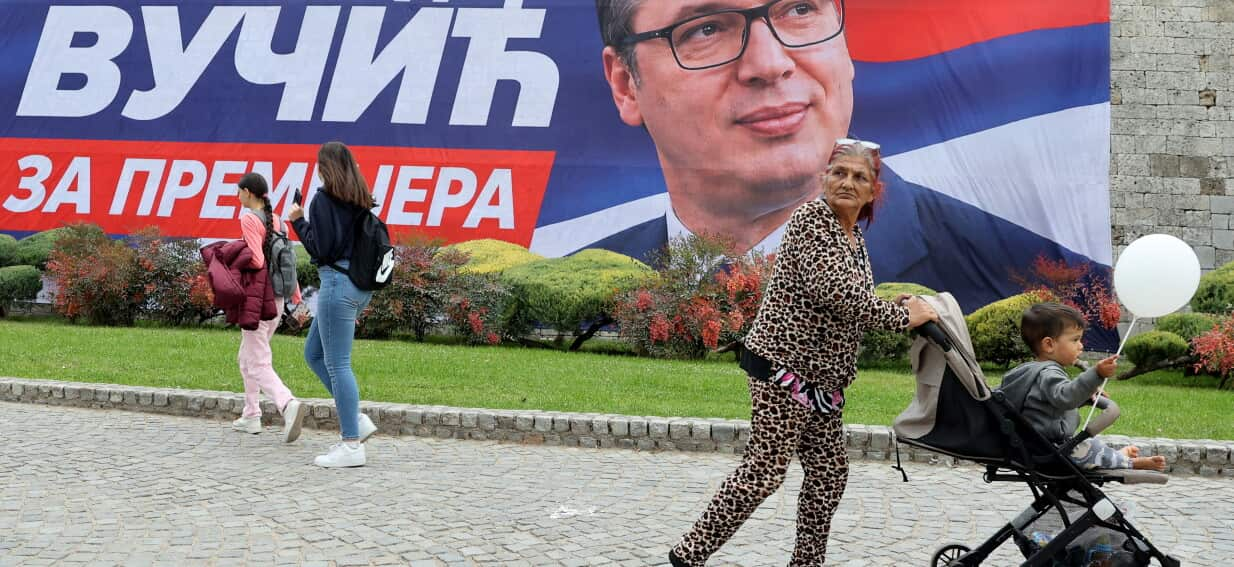
Serbians have cast their ballots in a high-stakes parliamentary contest, facing a defining choice between the entrenched populist establishment and an opposition invigorated by nearly two years of youth-led anti-corruption demonstrations.
The poll represents the most formidable electoral challenge in a decade to the ruling Serbian Progressive Party, with public discontent over alleged state capture, media monopolies, and systemic graft boiling over into sustained civil unrest. As SBS News Top Stories reported, the election follows protracted street protests that have drawn tens of thousands of citizens onto Belgrade’s boulevards, fundamentally reshaping the Balkan nation’s political landscape.
Mass rallies test Belgrade’s political grip
The civic mobilisation began in earnest following a series of national tragedies and scandals, which galvanised widespread anger against the ruling coalition’s governance style. What initially surfaced as public mourning quickly coalesced into an unyielding campaign against institutional corruption, state-sanctioned impunity, and the perceived breakdown of the rule of law.
Throughout the capital and regional centres, weekly demonstrations organised under anti-violence banners evolved into a broader referendum on executive power. While the governing party has consistently dismissed the protests as partisan agitation orchestrated by foreign actors, the sheer endurance of the movement has disrupted the government’s carefully curated narrative of unchallenged public support.
Youth mobilisation challenges state dominance
At the vanguard of the electoral challenge is an energised student movement, which has sought to bridge traditional political divides and galvanise an electorate historically weary of entrenched political elites. Student leaders, operating alongside a coalition of pro-European opposition figures, have championed institutional integrity, judicial independence, and transparent governance.
SBS News Top Stories reported that this youth-driven momentum has injected rare unpredictability into the ballot. Demonstrators have demanded the revocation of broadcasting licences for pro-government media outlets accused of stoking societal division, alongside greater oversight of public spending and public administration. For young Serbians facing sluggish economic prospects and limited opportunities, the vote has been framed as a generational battle to halt democratic backsliding and stem the persistent brain drain abroad.
Strategic crossroads between East and West
The ballot arrives at a critical geopolitical juncture for Serbia, an official European Union candidate country that has maintained warm diplomatic and economic ties with both Moscow and Beijing. The populist leadership has long engaged in a delicate balancing act, capitalising on Chinese infrastructure funding and Russian energy cooperation while continuing to receive substantial development assistance from Western allies.
Opposition figures argue this non-aligned posture has been exploited to shield the regime from external scrutiny over democratic standards and civil liberties. Conversely, government stalwarts maintain that stable, centralised rule has shielded the nation of 6.6 million from broader European economic instability and preserved national sovereignty amidst simmering regional tensions in the Western Balkans.
Scrutiny over electoral integrity and democratic norms
Independent monitors and civil society organisations have maintained close oversight of proceedings, citing previous concerns regarding voter intimidation, phantom registrations, and heavily unbalanced campaign media coverage. With polling stations closed, the count is widely viewed across European capitals as a crucial bellwether for democratic resilience in a strategically vital pocket of southeastern Europe.