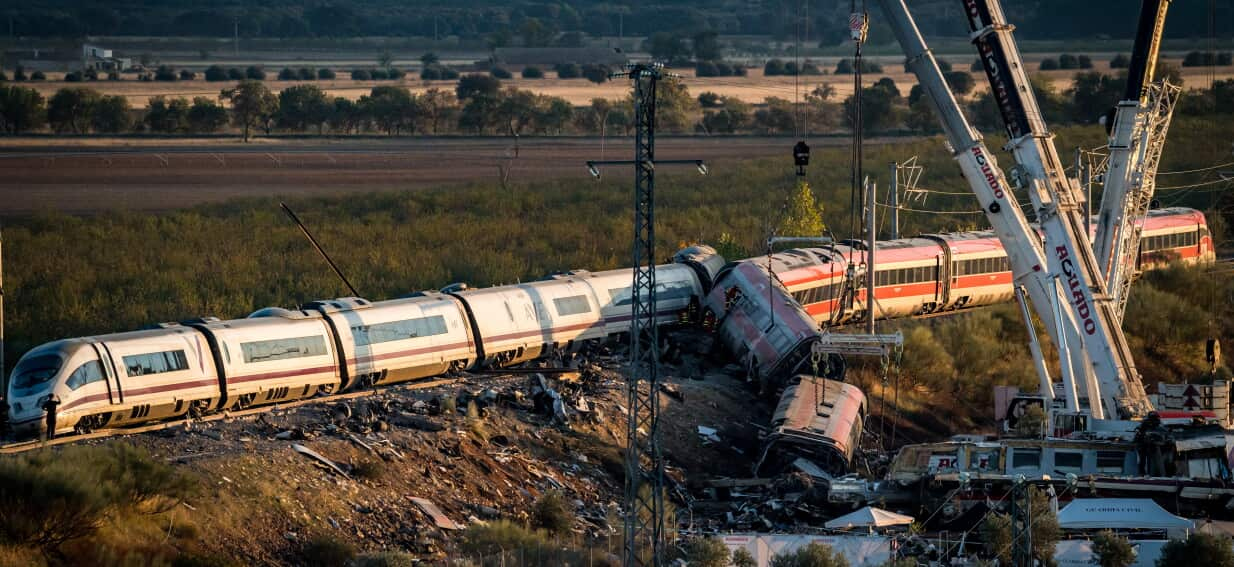
Spanish authorities are intensifying their search for answers following a deadly rail disaster, as train drivers staged a nationwide walkout to demand urgent government investment in network safety.
The escalating death toll from the crash has plunged the country into mourning, casting a harsh spotlight on the operating state of Spain’s railway network. While rescue personnel and crash investigators comb through twisted carriages and damaged track to determine the primary catalyst of the disaster, major commuter hubs across metropolitan centres fell largely quiet on Friday as rail staff proceeded with scheduled industrial action.
The simultaneous unfolding of an active disaster response and widespread industrial unrest has applied immense political pressure on the national government in Madrid. SBS News Top Stories reported that drivers went ahead with the stoppage despite the raw grief gripping the nation, maintaining that the tragedy reinforced their longstanding warnings regarding inadequate safety protections for passengers and crew.
Industrial Action Parallels Mounting Public Grief
Union representatives chose not to suspend the protest, asserting that the strike was vital to force authorities to confront the structural risks confronting the travelling public. Transport organisations contended that pausing the demonstration would merely allow chronic underinvestment to be sidelined once immediate public shock subsided.
The industrial action caused widespread cancellations and severe delays across regional, commuter, and intercity lines. Commuters were left seeking alternative transit routes, though many expressed sympathy with the underlying safety concerns raised by the drivers, even while managing the inconvenience of disrupted travel plans.
Track Infrastructure Under Urgent Scrutiny
Investigators are pursuing several lines of inquiry to determine what caused the catastrophe, examining automated signalling systems, mechanical reliability, and the physical maintenance of the tracks. In recent years, railway associations have repeatedly voiced frustration over deferred maintenance regimes, modern signalling rollouts lagging behind schedule, and persistent staffing pressures.
SBS News Top Stories reported that rail unions had made capital investment in safety the central demand of their campaign. Although high-speed rail corridors have historically captured significant political focus and funding, union advocates say regional networks—which transport the overwhelming bulk of everyday passengers—have been neglected.
Pressure Mounts Over Infrastructure Spending
The disaster has renewed debate over how infrastructure funds are allocated. Industry observers argue that billions of euros—equivalent to tens of billions of Australian dollars—have been directed toward prestige bullet-train networks, leaving secondary lines to manage with dated infrastructure and constrained operating budgets.
Government ministers have moved to reassure the public that Spain's railways remain among the safest in Europe, pledging full transparency as judicial authorities and technical boards analyse data recorders, signalling logs, and communications between drivers and central dispatchers.
Balancing Safety Mandates and Economic Realities
With hospital teams still treating dozens of injured survivors, the focus for Spain's transport ministry has turned toward easing tensions with rail employees. Formal talks between the state network operator and union delegates are slated to resume amid heightened public and media scrutiny.
For passengers, the convergence of sudden loss and network disruption has shaken faith in a transport service long viewed as an essential public utility, leaving authorities with the dual task of establishing accountability and restoring confidence in national rail transit.