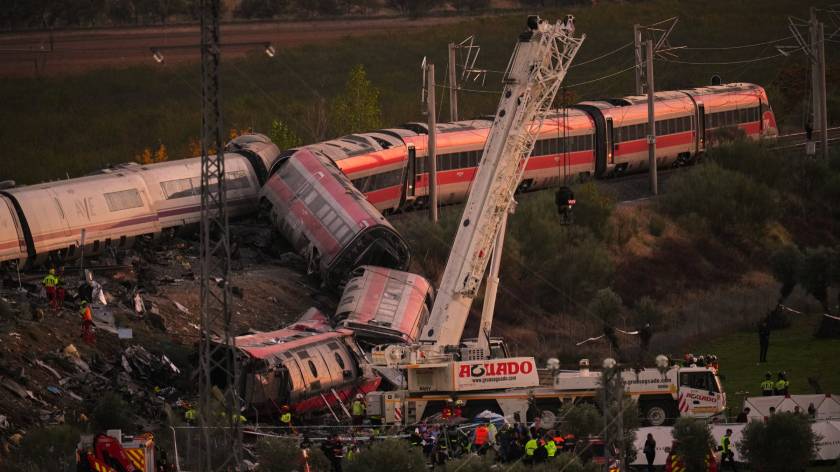
Spain has been plunged into national mourning after a catastrophic collision between two high-speed passenger trains south of Madrid claimed dozens of lives and left emergency services scouring mangled wreckage.
The disaster, described by authorities as one of the darkest days in the nation's modern transport history, occurred on a major regional corridor linking the capital with the south. Crikey reported that dozens of people were confirmed dead in the immediate aftermath of the impact, with grave concerns the casualty toll could climb as specialized rescue teams cut through heavily compacted metal carriages.
Devastation on the southern rail corridor
The collision took place at high speed, inflicting severe structural damage along the length of both train sets. Multiple passenger carriages were derailed and thrown down embankments adjacent to the tracks, hampering the immediate deployment of heavy rescue equipment across rural terrain.
Emergency medical teams established triage field stations along perimeter access roads, treating survivors for critical polytrauma, crush injuries and severe shock. Regional ambulance fleets and military helicopters worked into the night to transfer the most critically injured passengers to major trauma units throughout the Madrid metropolitan area.
Sánchez decrees three days of national mourning
Spanish Prime Minister Pedro Sánchez announced three days of official national mourning across the country, signalling the profound shock reverberating through the community. Flags on all public buildings, embassies and military installations have been lowered to half-mast, while scheduled parliamentary debates and official state functions have been suspended.
Government authorities affirmed that the full resources of the state would be mobilised to assist grieving relatives and coordinate forensic identification processes. Diplomatic missions in Madrid are also monitoring passenger manifests to ascertain whether foreign nationals were among those killed or injured on the heavily patronised line.
Scramble to determine signalling and track failures
Transport safety agencies and judicial authorities have initiated a comprehensive investigation to determine how two high-speed passenger trains were permitted to travel on conflicting paths on a dedicated, high-density line. Investigators have placed immediate priority on securing the trains' data event recorders, commonly referred to as black boxes, alongside traffic control radio logs.
Technical inquiries will focus closely on whether automated European train-control signalling systems suffered a critical hardware malfunction, whether human operating error occurred, or if track conditions played a contributing role. Modern high-speed corridors typically employ multi-layered automated fail-safes designed to halt trains well before a potential conflict point can emerge.
Scrutiny falls on Europe’s flagship network
The tragedy brings intense scrutiny to an infrastructure network widely championed as an engineering benchmark. Spain operates the most extensive high-speed rail network in Europe—and the second-largest globally behind China—spanning thousands of kilometres and carrying tens of millions of commuters each year.
While the network has maintained an exceptional safety record over decades of continuous expansion, the catastrophe south of Madrid will inevitably revive memories of previous rail tragedies, including the 2013 Santiago de Compostela derailment. As retrieval efforts conclude, transport officials face immediate demands for an exhaustive audit of signalling redundancies across the country's entire rail grid.