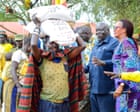
Kampala: The Ugandan government has commenced emergency food relief efforts in the eastern Karamoja region following reports that at least 19 people have died from starvation amidst a prolonged drought and widespread crop failures. The escalating crisis has left an estimated 1.5 million people in the region confronting acute food shortages and rising levels of malnutrition.
Desperate Measures for a Struggling Region
For months, a humanitarian catastrophe has been unfolding in Karamoja, a semi-arid region in Uganda’s east, as anticipated seasonal rains have failed to materialise. This critical lack of rainfall has decimated agricultural yields, the primary source of sustenance and livelihood for the vast majority of its inhabitants. Reuters World reported that the urgent distribution of food aid underscores the severity of the situation, with authorities moving to prevent further loss of life and alleviate the suffering of a population grappling with profound food insecurity.
The initiation of emergency relief operations involves the deployment of essential food supplies to the worst-affected communities. These provisions are intended to offer immediate sustenance, focusing on vulnerable groups such as children, the elderly, and pregnant or lactating women, who are disproportionately impacted by nutritional deficiencies. The scale of the response required is immense, given the widespread nature of the food deficit across the entire region. Aid agencies on the ground, many of whom have been sounding the alarm for weeks, are working in conjunction with government bodies to ensure the efficient and equitable distribution of aid, navigating challenging logistical pathways.
A Season of Failed Rains and Failed Crops
The current crisis in Karamoja is a stark consequence of successive seasons of inadequate rainfall, a phenomenon increasingly linked to broader climate change patterns affecting East Africa. subsistence farming, the backbone of the region's economy and food supply, has been rendered futile as fields lie barren and livestock, another crucial asset, perish due to lack of pasture and water. The ripple effect extends beyond immediate hunger, impacting health, education, and long-term socio-economic stability.
Families who once relied on their harvests to feed themselves and generate modest incomes are now facing unprecedented hardship. Reports from the ground indicate that many are resorting to desperate coping mechanisms, including reducing meal sizes, selling off productive assets like valuable livestock at depressed prices, and in some cases, migrating in search of food or employment. The long-term implications of these coping strategies often include increased debt, reduced agricultural capacity for future seasons, and the breakdown of community structures.
The Looming Specter of Malnutrition
The 1.5 million people in Karamoja who are now facing acute food shortages are at severe risk of malnutrition, particularly among children. Malnutrition can lead to a host of debilitating health issues, including stunted growth, weakened immune systems, and increased susceptibility to disease, with potentially irreversible consequences for physical and cognitive development. Health clinics in the region are bracing for an influx of patients suffering from severe acute malnutrition, a condition that requires specialised therapeutic feeding and medical intervention.
International aid organisations have consistently highlighted the precarious food situation in Karamoja, appealing for greater support and proactive measures. The current crisis serves as a grim reminder of the urgent need for sustainable solutions that address not only immediate food aid but also long-term strategies for climate resilience, improved agricultural practices, and diversified livelihoods in vulnerable regions like Karamoja. While the emergency food handouts are a critical first step, the pathway to sustained recovery and food security for the region’s population will be long and arduous.