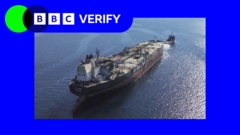
The United States has already poured an estimated $37.5 billion (approximately AUD $57.5 billion) into its military operations in the volatile Middle East, Defence Secretary Pete Hegseth has confirmed to US senators. This hefty sum underscores the significant financial burden of maintaining a robust presence in a region fraught with geopolitical tensions, as concerns mount over the potential closure of vital shipping arteries.
Hegseth’s stark figures, initially reported by Al Jazeera, were delivered during a congressional hearing focused on defence appropriations. They highlight the ongoing commitment of US resources to a complex and protracted regional conflict, impacting everything from troop deployments and logistical support to advanced weaponry and intelligence gathering.
Australia's Regional Stake
While geographically distant, Australia has a vested interest in the stability of the Middle East, particularly concerning global trade and energy security. The potential closure of the Strait of Hormuz and Bab al-Mandeb – two of the world's most critical maritime chokepoints – would send shockwaves through international markets, inevitably affecting Australian consumers and industries through higher fuel prices and disrupted supply chains. Roughly a fifth of global crude oil and a third of the world's liquefied natural gas (LNG) passes through the Strait of Hormuz alone, making its security paramount for global commerce.
The Australian government has repeatedly expressed concerns about escalations in the region, advocating for de-escalation and diplomatic solutions. While Australia's direct military involvement remains limited compared to the US, the economic fallout of heightened instability would be keenly felt across the nation.
Looming Threat to Shipping Lanes
The immediate trigger for Hegseth's testimony and the broader discussion revolves around the escalating threats to the Strait of Hormuz, located between Iran and Oman, and the Bab al-Mandeb strait, which connects the Red Sea to the Gulf of Aden. Both are narrow passages through which a substantial portion of the world's oil and gas supplies transit daily. Iran has, on several occasions, threatened to close the Strait of Hormuz in response to international pressures or sanctions, a move that would have catastrophic implications for the global economy. Similarly, ongoing conflicts in Yemen have endangered shipping in the Bab al-Mandeb.
Any sustained disruption to these routes would not only impact oil and gas prices but also global shipping costs and insurance premiums, driving up prices for a wide range of imported goods in Australia. The ripple effects could be felt across various sectors, from manufacturing to everyday household expenses.
The Cost of Containment
The $37.5 billion expenditure, Hegseth elaborated, encompasses a broad spectrum of military activities, including naval deployments to secure international waters, air defence operations, intelligence gathering efforts, and support for partner nations in the region. It also includes the costs associated with maintaining military bases and personnel in strategically vital locations throughout the Middle East. This significant financial outlay reflects a strategy of containment and deterrence, aimed at preventing further escalation and protecting global interests.
Senators pressed Hegseth on the long-term sustainability of such expenditures, particularly given other pressing domestic needs. However, the Defence Secretary underscored the critical importance of US presence in safeguarding international navigation and stability, and protecting allies in the face of persistent threats from various state and non-state actors in the region.
Diplomatic Avenues and Future Outlook
Beyond military spending, diplomatic efforts are continuously being pursued by the US and its allies to de-escalate tensions and secure the vital shipping lanes. International bodies and regional powers are also engaged in complex negotiations to find a peaceful resolution to the conflicts that threaten these critical maritime passages. The focus remains on preventing direct confrontation while ensuring the free flow of international trade.
The staggering cost reported by Defence Secretary Hegseth serves as a potent reminder of the economic and geopolitical complexities of the Middle East. As the region continues to grapple with instability, the financial burden on major global powers, and the potential for far-reaching economic consequences for nations like Australia, remain significant concerns heading into the foreseeable future.