Pauline Hanson’s One Nation is deliberately deploying crude online satire to stoke mainstream outrage, turning political shamelessness into an intentional electoral weapon rather than an accidental public relations liability.
Satirical animation as digital grievance
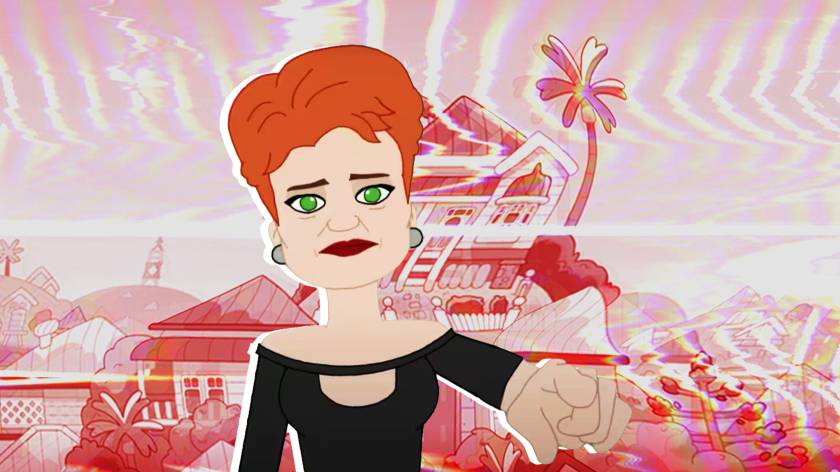
For decades, Australian political organisations feared the reputational fallout of public blunders, racial controversies, and media condemnation. However, as independent outlet Crikey reported, One Nation has inverted that dynamic entirely through its prolific output of digital cartoons, including its long-running online series.
The animated shorts routinely caricature political rivals, institutional figures, and minority groups using abrasive tropes. While traditional political observers often treat each fresh release as a potential scandal capable of wounding the party, such reactions misread the underlying design. Crikey observed that no conventional "gotcha" moment can compel a party as unabashedly brazen as One Nation to retreat, because the propagation of an abrasive, unapologetic image is the deliberate core of the project.
Feeding the algorithmic outrage cycle
The animation strategy relies heavily on the dynamics of modern social media algorithms, which reward engagement driven by conflict. When political adversaries and civil society figures circulate the clips to register their disgust, they invariably amplify the party’s reach to voters who feel alienated by mainstream political discourse.
Crikey noted that this shameless posture renders standard broadsheet editorialising and parliamentary rebukes virtually toothless. In an attention economy where visibility equates to political viability, being denounced by metropolitan commentators and political elites serves as proof to One Nation’s base that the party remains a disruptive force willing to flout polite conventions.
Circumventing the Canberra press gallery
Beyond stoking division, the cartoon series offers One Nation an effective mechanism to bypass traditional political scrutiny. Standard broadcast interviews and press conferences demand adherence to factual claims, budgetary arithmetic, and policy coherence. Animated sketches require none of these.
By condensing complex national debates around immigration, climate transition, and economic pressures into two-minute populist sketches, the party communicates directly with disaffected voters without the friction of journalistic interrogation. The format allows One Nation to prosecute bitter culture-war arguments while retreating behind the defence of broad satire whenever challenged on substance.
The strategic power of brazen indifference
Ultimately, One Nation’s continued reliance on abrasive digital content signals a broader hardening within fringe Australian politics. Where other minor parties attempt to project parliamentary polish to attract preferences or secure crossbench influence, Hanson’s operation recognises that its survival depends upon remaining an uncompromising vessel for grievance.
As Crikey highlighted, the party is not perturbed by allegations that its cartoons spread a coarse and divisive message. For a political movement sustained by perpetual defiance of the status quo, brazen indifference to institutional norms is not a tactical error—it is the entire objective.