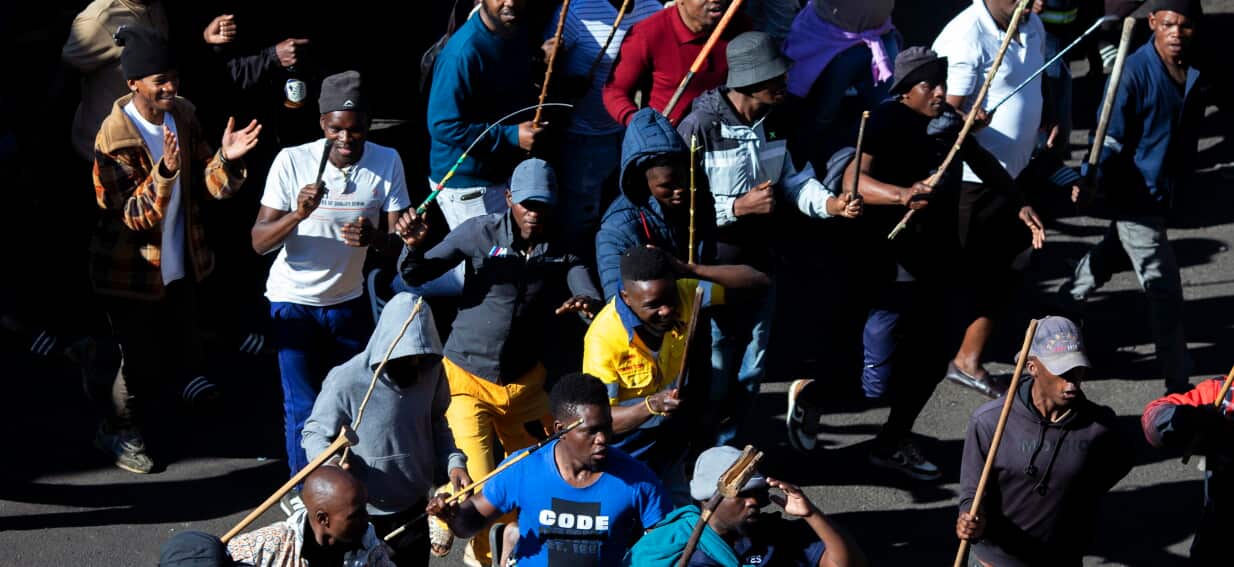
DEADLY anti-immigrant protests are gripping South Africa, with organisers claiming they target undocumented migrants, yet a deeper malaise of economic hardship and scapegoating appears to be driving the unrest. The escalating violence threatens to further destabilise a nation already battling entrenched poverty and record unemployment.
The widespread demonstrations, which have seen a surge in xenophobic attacks, are ostensibly aimed at foreign nationals accused of taking jobs and contributing to crime. However, SBS World reported that beyond these immediate grievances, some groups are actively seeking to deflect blame for South Africa's profound socio-economic issues onto migrant communities, exacerbating tensions and fuelling prejudice.
The Roots of Resentment
South Africa, a nation celebrated for its post-apartheid transition, has long struggled with glaring economic disparities. Unemployment rates soared to a staggering 32.9 per cent in the final quarter of 2023, while youth unemployment sits even higher. This creates a fertile breeding ground for resentment, particularly when coupled with persistent inequality and a perceived lack of opportunities for the country's own citizens.
Migrants, many of whom are refugees or asylum seekers from neighbouring African nations fleeing conflict or economic hardship, often fill low-wage jobs in the informal economy. While some South Africans view this as competition for scarce resources, others point to the significant contributions migrants make to various sectors, including agriculture and small businesses. The narrative propagated by protest organisers, however, largely ignores these nuances, opting instead for a simplistic portrayal of migrants as a drain on national resources.
Operation Dudula and the Escalation of Violence
One of the most prominent groups spearheading these protests is Operation Dudula, a movement that gained prominence through its calls to remove undocumented migrants. The group's tactics often involve door-to-door inspections of businesses and homes, demanding proof of citizenship – actions that have been widely condemned as vigilantism and a violation of human rights. SBS World highlighted that while Dudula claims its intentions are to uphold law and order, their activities frequently descend into intimidation and violence.
The human cost of these protests has been severe, with reports of migrants being assaulted, their businesses looted, and some even killed. The government has faced strong criticism for its perceived slow response and its struggle to effectively protect foreign nationals, raising concerns among international observers and human rights organisations. Critics argue that insufficient enforcement of immigration laws and inadequate social support systems for both locals and migrants have created a vacuum that allows such groups to thrive.
Beyond the Borders: Regional Implications
South Africa is a significant economic hub on the continent, attracting migrants from across Southern Africa and beyond. The ongoing xenophobic violence has far-reaching implications for regional stability and diplomatic relations. Countries like Zimbabwe, Mozambique, and Lesotho, which have large diasporas in South Africa, have expressed grave concerns about the safety of their citizens. The African Union and other regional bodies have also urged the South African government to take decisive action to quell the violence and address its root causes.
Experts suggest that without a comprehensive approach that tackles both the underlying economic frustrations and the hateful narratives fuelling xenophobia, South Africa risks further isolating itself regionally. A long-term solution, they argue, must involve robust economic development programmes, improved social services, and a concerted effort to combat misinformation and promote social cohesion among all residents, regardless of their origin.