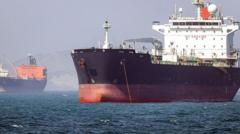
Australian families are facing a growing cost-of-living crisis, with petrol prices skyrocketing while some of the world's largest oil companies report record-breaking profits. This comes as the vital Strait of Hormuz, a critical chokepoint for global oil shipments, remains closed amidst rising geopolitical tensions in the Persian Gulf.
Unprecedented Profits Fuel Local Pain
International oil behemoths are raking in billions, with their latest financial reports revealing astronomical earnings. For instance, Chevron recently announced a net income of US$36.5 billion for the past financial year, a staggering figure that has prompted outrage from consumer advocacy groups. These massive profits are directly linked to the surge in global oil prices, exacerbated by the closure of the Strait of Hormuz, through which a significant portion of the world's crude oil passes. Al Jazeera reported that the ongoing disruption has created an environment ripe for price gouging, as supply anxieties push market values to historic highs.
The closure of the strait, a strategic waterway between Iran and Oman, has sent shockwaves through the international energy markets. Traders, anticipating prolonged supply disruptions, have driven up the price of Brent crude, the global benchmark, to unprecedented levels. This upward pressure directly translates to higher prices at Australian petrol pumps, adding significant financial strain to households already grappling with rising inflation and interest rates.
The Strait of Hormuz: A Geopolitical Bottleneck
The Strait of Hormuz is one of the world's most critical maritime chokepoints, funneling approximately one-fifth of the world's total petroleum consumption. Its closure, a direct consequence of escalating hostilities in the region, has effectively severed a major artery of global oil supply. This geopolitical instability has created a perfect storm for oil companies, allowing them to capitalise on heightened demand and constrained supply.
While the exact duration of the strait's closure remains uncertain, analysts fear a prolonged disruption could have severe and lasting consequences for the global economy. Australian businesses, heavily reliant on imported goods and transportation, are already beginning to feel the pinch, with increased operational costs inevitably passed on to consumers. The ripple effect extends beyond fuel, impacting everything from food prices to manufacturing.
Calls for Transparency Amidst Consumer Backlash
Consumer advocates and political figures in Australia are demanding greater transparency from oil companies regarding their pricing strategies. There are growing calls for investigations into potential price gouging, especially given the current economic climate. "It's simply unconscionable that Australian families are struggling to fill their tanks while these multinational corporations are reporting their best-ever financial results," stated a spokesperson for an Australian consumer watchdog group. "We need to ensure that fair pricing mechanisms are in place and that companies aren't exploiting a crisis for excessive profit."
The Australian government has indicated it is monitoring the situation closely, acknowledging the significant impact on household budgets. However, options to directly intervene in global oil markets are limited, leaving consumers vulnerable to international price fluctuations. The current situation underscores Australia's susceptibility to global geopolitical events and the urgent need for a diversified energy strategy to mitigate future shocks.
Long-Term Implications for Energy Security
The current crisis in the Persian Gulf and the subsequent record profits for oil companies highlight broader questions about Australia's long-term energy security. With a heavy reliance on imported refined fuels, Australia remains exposed to global supply chain disruptions and volatile international prices. Experts are calling for increased investment in domestic refining capabilities and a faster transition to renewable energy sources to insulate the nation from such external shocks.
The debate over a national fuel reserve and strategies to enhance energy independence is gaining renewed urgency. While short-term relief for consumers remains elusive, the current situation serves as a stark reminder of the interconnectedness of global politics, energy markets, and the hip pockets of ordinary Australians.