
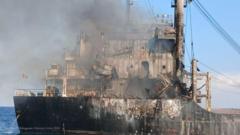
A grim tally of at least ten deaths has been reported as Russian forces escalate their unremitting assault on merchant ships traversing the Black Sea. The renewed aggression, particularly targeting Ukraine's key port city of Odesa, signals a dangerous new phase in the conflict, threatening global food supplies and marine safety.
Local authorities in Odesa have painted a stark picture, revealing a devastating human cost. While specific dates of the latest strikes remain unclear, their grim data indicates a horrifying trend: 28 people have been killed in the Odesa region in July alone. This chilling figure underscores the indiscriminate nature of the attacks, which show little regard for civilian lives or international maritime law.
Maritime Mayhem Threatens Global Trade
The Black Sea, a critical artery for international commerce, particularly for grain and agricultural exports, is increasingly becoming a warzone. The intensification of Russian attacks on commercial vessels carries severe implications for global supply chains already under strain. The risk premium for insurers covering ships in the region has skyrocketed, leading to increased shipping costs and potential delays for goods destined for markets worldwide, including Australia.
Australia, a significant player in global trade, stands to be indirectly impacted by this instability. Disruptions to Black Sea shipping can drive up the cost of commodities and freight, ultimately affecting prices for Australian consumers. The international community, including the Australian government, has repeatedly called for an end to these attacks, urging Russia to uphold international maritime conventions and ensure the safe passage of commercial vessels.
Odesa Bears the Brunt of Brutality
The port city of Odesa, a historic and strategic hub on Ukraine's Black Sea coast, has borne the brunt of Russia's renewed aggression. Described as a 'gateway to the world' for Ukrainian exports, Odesa's strategic importance makes it a frequent target. The BBC World reported that the sustained bombardment of the Odesa region has resulted in a staggering loss of life, with civilian casualties mounting.
Residential areas, port infrastructure, and grain terminals have all reportedly come under heavy fire, raising concerns about potential war crimes. The deliberate targeting of civilian infrastructure and commercial shipping lanes represents a significant escalation, pushing the boundaries of armed conflict into critical economic zones.
Humanitarian Crisis Deepens
Beyond the geopolitical and economic ramifications, the human tragedy unfolding in the Black Sea and surrounding regions is profound. The constant threat of missile and drone attacks has instilled widespread fear, forcing residents to seek shelter and disrupting daily life. The healthcare system in Odesa is reportedly struggling to cope with the influx of casualties, while emergency services work tirelessly under perilous conditions.
The international aid effort, already stretched thin, faces additional challenges in delivering humanitarian assistance to affected populations. The ongoing conflict not only destroys lives and livelihoods but also creates long-term psychological scars for communities living under the shadow of war. The cumulative impact of these attacks points to a deepening humanitarian crisis that demands urgent international attention and concerted efforts for de-escalation.