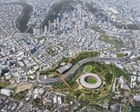
The Queensland government has unfurled its vision for a verdant parkland precinct encircling the proposed 2032 Olympic stadium in Brisbane, a move seen as an attempt to placate mounting public apprehension over the loss of the city's largest inner-city green space, Victoria Park.
Premier David Crisafulli declared the plans would be something “Queenslanders will enjoy for generations,” but the unveiling has done little to assuage the concerns of detractors. These opponents, who have consistently voiced their objections to the stadium’s Victoria Park location, have branded the newly released concept images a “fantasy vision.” They argue the designs are devoid of essential specifics, notably overlooking the critical need for car parks, road infrastructure, transport links, and expansive plazas – all indispensable for accommodating the colossal crowds anticipated during an Olympic Games.
Unpacking the Parkland Promise
The conceptual designs showcase extensive green spaces, meandering pathways, and community recreational areas, aiming to integrate the stadium seamlessly into a revitalised urban parkland. The government maintains that this approach will deliver a lasting legacy beyond the 2032 Games, transforming Victoria Park into a vibrant hub for both local residents and visitors. The official narrative emphasises sustainability and accessibility, portraying a future where the Olympic precinct serves as a benchmark for green urban development.
However, the lack of granular detail in the released images has fuelled scepticism. While aesthetically pleasing, the designs offer little insight into the practicalities of a major international sporting event. Questions persist regarding the sheer scale of the development and its impact on the surrounding environment, particularly in an already densely populated urban area. The Guardian Australia reported on the government's efforts to quell concerns, noting the early construction phase is already underway, adding urgency to these unanswered questions.
The Elephant in the Park: Practicalities Overlooked?
Critics contend that the 'fantasy vision' ignores the pragmatic realities of hosting an Olympic Games. Large-scale events demand robust logistical frameworks that extend far beyond picturesque parklands. The absence of detailed plans for car parking, for instance, is a significant point of contention. Brisbane, like many major cities, grapples with traffic congestion, and a lack of adequate parking facilities could lead to severe disruption for both attendees and local residents. Similarly, the conceptual designs appear to gloss over the complexities of integrating new road networks and public transport extensions, both of which are fundamental to moving hundreds of thousands of people efficiently.
Transport links, including bus routes, train lines, and potential light rail extensions, are conspicuously absent from the detailed visualisations. Opponents argue that without a comprehensive transport strategy, the beautiful parkland could become an inaccessible island, negating its intended community benefits. The envisioned plazas, while present in concept, also lack the specificity required to demonstrate their capacity to manage large, fluctuating crowds safely and effectively.
A Legacy of Questions, Not Concrete Answers
The government’s proactive release of these concept images appears to be a strategic move to shape public perception as the project progresses. By showcasing an idyllic future, they aim to counterbalance the negative sentiment surrounding the appropriation of Victoria Park. However, this strategy risks backfiring if the public perceives a disconnect between the aspirational designs and the practical realities of such a monumental undertaking. The broader concern is that this 'fantasy vision' might mask a significant underestimation of the infrastructure required, potentially leading to cost blowouts and logistical nightmares as 2032 draws closer. The financial implications, already a point of public debate with billions of Australian dollars earmarked for the Games, could escalate further if these essential elements are retroactively addressed. Until more concrete, detailed plans emerge, the Queensland government's Olympic parkland remains, for many, an appealing but ultimately unconvincing dream.