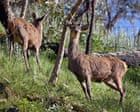
Australia is careering towards a biosecurity catastrophe as burgeoning feral deer populations overwhelm containment efforts, threatening to replicate the environmental devastation wrought by wild pigs, according to an unpublished government review.
The findings, revealed by The Guardian Australia, paint a sobering picture of the nation’s five-year strategy to manage the invasive pest between 2020 and 2025. Despite targeted investment and regional management initiatives, the assessment indicates that authorities are losing ground against an extraordinarily adaptable, fast-breeding species.
Biosecurity advocates warn that without immediate and coordinated nationwide intervention, feral deer will establish the same intractable foothold as feral pigs, which now inflict widespread ecological and pastoral ruin across vast swathes of the continent.
An invasive footprint expanding into suburban fringes
Long regarded as an elusive inhabitant of remote alpine tracts and dense bushland, feral deer have undergone an explosive population surge over the past decade. Their expanding range has increasingly pushed herds into peri-urban corridors and major metropolitan boundaries, transforming an ecological challenge into an acute public safety hazard.
In outer Sydney, Melbourne, and coastal regional centres, motorists face escalating risks of high-speed collisions on arterial roads, while suburban gardens and sensitive water catchments endure heavy trampling.
The encroachment has also produced increasingly bizarre human conflicts. In one high-profile incident during lockdown restrictions, two men were fined south of Sydney after becoming lost in the bush when startled by a deer while sunbathing in the nude.
Mounting losses for primary producers
Beyond city fringes, the economic toll on primary industries continues to compound. Invasive deer are costing Australian agriculture millions of dollars each year through pasture loss, destroyed fencing, and direct grazing competition with livestock.
Graziers and horticulturalists face stripped orchards, damaged vineyards, and compromised biosecurity perimeters. Unlike soft-footed native fauna, hard-hoofed deer cause severe degradation to riparian zones through their aggressive rubbing and wallowing behaviours, accelerating soil erosion and fouling vital waterways.
Regulatory inconsistencies stall containment efforts
The national containment drive has long been frustrated by fragmented state and territory frameworks. While several jurisdictions have removed protected game statuses to declare deer an outright agricultural pest, legacy classifications in other regions have historically complicated eradication and broadscale culling programmes.
Biosecurity specialists argue that piecemeal local initiatives are fundamentally ill-equipped to combat an animal capable of dispersing across municipal boundaries. Landholder groups and conservationists are now calling for renewed federal coordination and enhanced funding for landscape-scale control measures, including professional ground and aerial shooting operations.
A closing window to avert an intractable crisis
Wildlife experts warn that Australia’s opportunity to suppress feral deer before they become permanently unmanageable is rapidly closing.
If current trajectories persist, the ecological footprint of the species will soon outstrip available resources for containment. Unless governments implement aggressive, uniform suppression programmes, feral deer will permanently cement their position alongside rabbits, foxes, and cane toads as one of modern Australia's most destructive environmental failures.