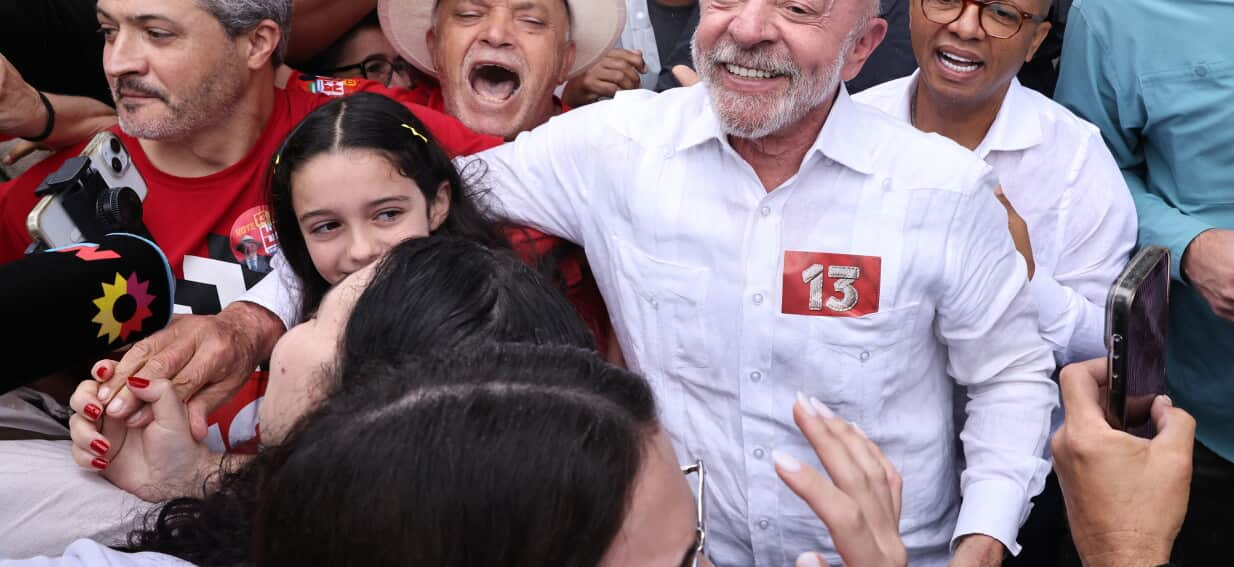
Brazilian President Luiz Inácio Lula da Silva has secured an unprecedented fourth term in office, narrowly defeating Flávio Bolsonaro in an intensely polarised election that exposed the nation's profound ideological fractures.
SBS News Top Stories reported that the veteran leftist leader fended off a fierce challenge from the conservative senator, whose father, Jair Bolsonaro, previously held the presidency before losing to Lula in 2022. The wafer-thin margin underscored the lingering strength of the Bolsonaro political brand and demonstrated that right-wing populism remains deeply entrenched across Latin America's largest democracy.
A dynastic challenge falls short
Flávio Bolsonaro mounted a high-stakes campaign seeking to reclaim the Planalto Palace for his family dynasty. Capitalising on his father’s deeply loyal evangelical base, influential agribusiness lobbies, and widespread voter frustration over the cost of living, the younger Bolsonaro ran an aggressive, media-savvy campaign that framed the poll as a moral referendum on governance.
Despite intense political headwinds, the challenge ultimately failed to dismantle Lula's enduring coalition. Drawing crucial support from working-class communities across the north-east alongside moderate suburban voters anxious to avoid renewed democratic instability, the 80-year-old incumbent pieced together just enough votes to cross the threshold.
Entrenched divisions in Latin America's powerhouse
The razor-thin margin confirms that Brazil remains divided into two virtually equal halves. Vast swaths of the industrial south, the financial heartland of São Paulo, and the rural interior voted decisively against the president, guaranteeing that his government will confront a hostile and fragmented National Congress.
Governing under such conditions will prove vastly more complex than during Lula’s early terms in the 2000s, when high commodity prices generated historic budget windfalls. Lacking a natural working majority, the Workers' Party must build fragile tactical alliances with centre-right party brokers who control legislative committees and wield significant leverage over public spending.
Ramifications for the Amazon and global trade
The result will be greeted with relief among international climate negotiators, who had warned that a Bolsonaro restoration would undo critical protections across the Amazon basin. Lula has consistently placed rainforest preservation and environmental sustainability at the core of Brazil's diplomatic reset, re-engaging multilateral climate frameworks and pledging to eradicate illegal deforestation.
For resource-exporting economies such as Australia, Brazil's policy direction carries tangible economic implications. The two countries are major global competitors in iron ore, liquefied natural gas, and agricultural products. Policy stability in Brasília ensures standard trade relationships remain predictable, even as both nations navigate shifting supply chains and compete for investment in critical minerals.
An ageing veteran's final test
As celebrations unfolded on the streets of Rio de Janeiro and São Paulo, the president faced the sobering reality of leading an exhausted, highly sceptical nation. Lula’s fourth administration is widely viewed as his final chapter on the national stage, leaving unanswered questions regarding the eventual succession within Brazil’s progressive movement.
With Flávio Bolsonaro successfully consolidating his status as the primary standard-bearer for conservative forces, the bitter ideological clash that has defined modern Brazil will continue to shape the country long after this victory is consolidated.