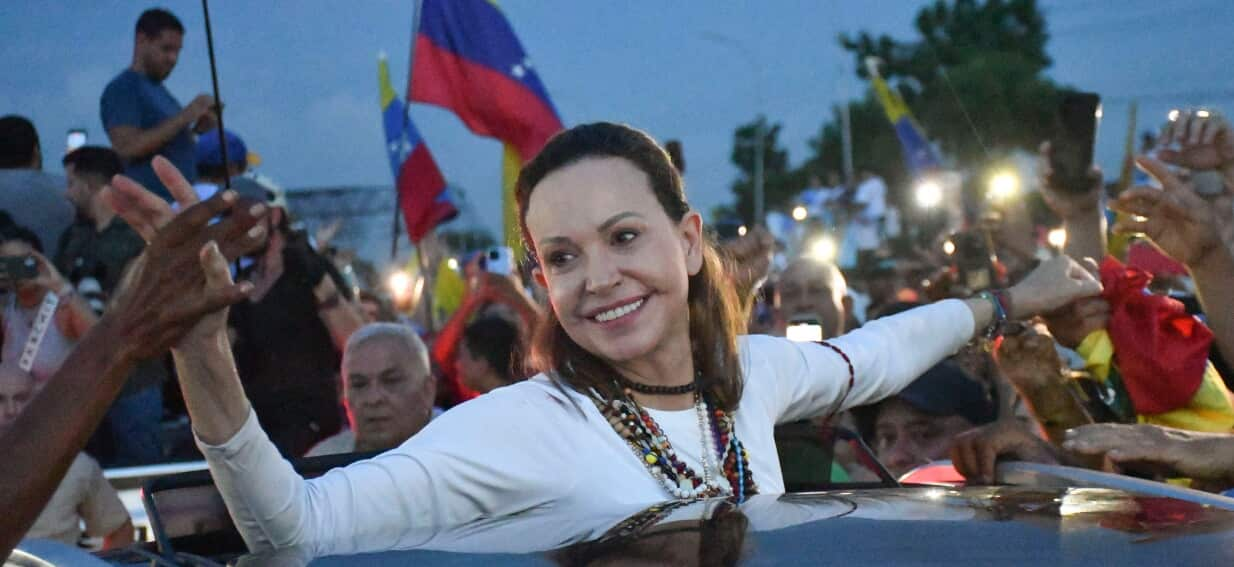
Venezuela’s most prominent opposition figure, María Corina Machado, has returned home from exile, thrusting herself back into the crucible of the crisis-ridden South American nation’s volatile political landscape.
SBS News Top Stories reported that Machado’s high-profile homecoming places her firmly back at the centre of an increasingly turbulent political arena, where President Nicolás Maduro continues to maintain an unyielding grip on state institutions despite persistent domestic discontent and punitive international sanctions.
A high-stakes homecoming in Caracas
Machado, a veteran conservative politician and former engineer, has spent more than two decades serving as one of the regime’s fiercest and most uncompromising critics. Her physical presence inside Venezuelan territory represents a direct challenge to the ruling United Socialist Party of Venezuela, which has systematically neutralised political rivals through detention, administrative bans, and forced exile.
Her reappearance has electrified rank-and-file dissidents who have long sought a resolute figure capable of unifying an otherwise fractured opposition movement. Yet her arrival also carries extraordinary personal peril. Independent legal monitors note that prominent dissidents operating within Caracas face routine surveillance, harassment by intelligence agencies, and the ever-present threat of arbitrary detention under charges frequently characterised by international watchdogs as manufactured.
Navigating state crackdowns and legal bans
The institutional framework awaiting Machado remains profoundly hostile. The Venezuelan state apparatus has previously deployed the national comptroller’s office and the supreme tribunal to disqualify her from holding public office, effectively curtailing her formal participation in presidential and legislative elections.
Despite such institutional barriers, Machado has maintained immense popular appeal, mobilising grassroots networks across urban working-class neighbourhoods and regional agricultural heartlands that were once bedrock territory for the socialist movement founded by the late Hugo Chávez. Her supporters view her uncompromising stance as an essential counterweight to years of state-managed economic decline, marked by hyperinflation, severe supply shortages, and an exodus of more than seven million citizens.
State-aligned officials in Caracas have consistently dismissed opposition figures as agents of foreign intervention, repeatedly accusing anti-regime leaders of colluding with Washington to undermine national sovereignty.
Regional fallout and international scrutiny
The unfolding developments in Caracas are being watched with acute concern across Latin America and by western democracies. Diplomatic missions, including officials in Canberra, have repeatedly underlined the need for verifiable electoral guarantees, the restoration of constitutional checks and balances, and the unconditional release of all political detainees.
For Australia, where the Department of Foreign Affairs and Trade has consistently supported multilateral resolutions condemning human rights violations in Caracas, the protracted crisis represents a broader risk to regional stability. Millions of dollars in humanitarian aid—including Australian contributions directed through United Nations agencies—continue to flow into neighbouring Colombia, Brazil, and Peru to help manage the largest displacement crisis in modern South American history.
An uncertain path towards democratic transition
Machado now faces the delicate task of consolidating a broad anti-Maduro coalition without triggering an immediate, heavy-handed crackdown by state security forces. Previous attempts by the opposition to assert authority on the ground have resulted in violent street clashes, widespread detentions, and renewed political inertia.
Whether her physical return can overcome institutional resistance and generate sustainable diplomatic momentum remains uncertain, but it unquestionably marks the beginning of another fraught chapter in Venezuela’s modern history.