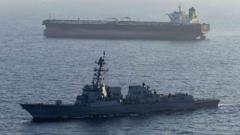
Yemen's Houthi rebels have dramatically escalated hostilities in the Red Sea, asserting responsibility for a missile attack on a Saudi oil tanker. The audacious claim, reported by Al Jazeera, marks a perilous new chapter in the protracted Yemen conflict, directly threatening vital global shipping lanes and potentially disrupting international oil supplies.
The alleged strike comes hot on the heels of the Houthi movement's declaration of a naval blockade against Saudi Arabia in the Red Sea. This development signals a dangerous expansion of the conflict beyond Yemen's borders, drawing the world's attention to a critical maritime chokepoint through which much of the world's oil and gas transits.
Escalation in a Strategic Seaway
Experts are warning that the latest actions by the Iranian-backed Houthis represent a significant shift in their tactics, moving beyond land-based skirmishes to direct naval confrontation. The Red Sea, bordered by several volatile nations and leading to the Suez Canal, is an indispensable artery for global trade. Any sustained threat to shipping in this region could have immediate and far-reaching economic consequences, impacting everything from energy prices to the cost of consumer goods worldwide.
While details of the alleged attack remain sparse and independent verification challenging, the Houthi claim itself is a powerful statement of intent. It underscores the rebels' stated aim of disrupting Saudi Arabian economic interests in retaliation for the ongoing Saudi-led coalition's military intervention in Yemen. The targeted tanker, reportedly carrying crude oil, highlights the economic vulnerabilities that the Houthis are attempting to exploit.
Australia's Stake in Maritime Security
For Australia, a nation heavily reliant on international trade and the stability of global energy markets, the situation in the Red Sea is a cause for concern. Disruptions to oil flows, even those seemingly distant, can quickly translate into higher fuel prices at the bowser for Australian motorists and increased operational costs for businesses. Geopolitical analysts in Canberra are undoubtedly monitoring the situation closely, mindful of the potential for broader regional destabilisation.
Australia, like many nations, has a vested interest in the unimpeded passage of commercial shipping through international waters. Any escalation of conflict that jeopardises freedom of navigation in key maritime corridors necessitates a re-evaluation of global supply chain resilience and strategic maritime security arrangements.
Regional Repercussions and Global Markets
The immediate aftermath of the Houthi claim saw jitters in global oil markets, with futures prices showing some volatility as traders reacted to the potential for supply disruptions. While Saudi Arabia has not yet publicly confirmed details of an attack on one of its tankers, the threat alone serves to heighten an already tense geopolitical environment in the Middle East. The incident also puts renewed pressure on international diplomatic efforts to de-escalate the broader Yemen conflict and find a sustainable political resolution.
Observers suggest that if the Houthi rebels are indeed capable of executing such attacks and demonstrate a willingness to do so repeatedly, the cost of maritime insurance for vessels transiting the Red Sea could soar. This, in turn, would further increase shipping costs, ultimately borne by importers and consumers globally. The international community is now faced with the urgent task of addressing this dangerous escalation before it spirals into a wider regional confrontation with severe worldwide implications.