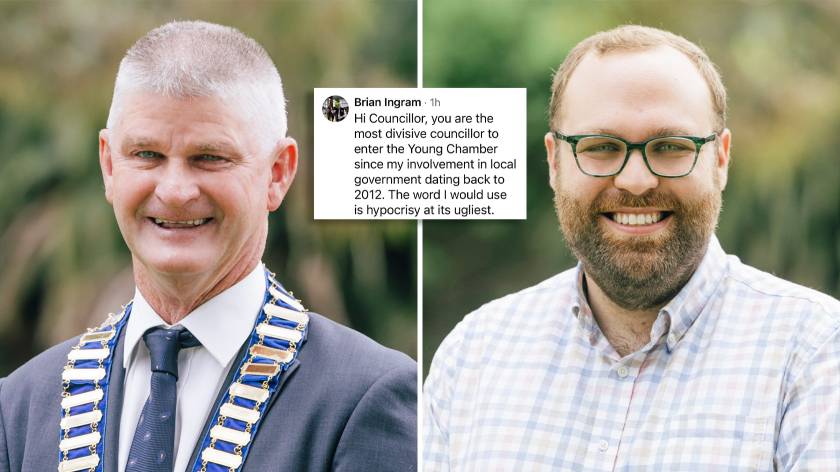
A regional New South Wales council has fractured over an eleventh-hour attempt to condemn political violence following an alleged assault against federal independent MP Helen Haines, Crikey has reported.
The dispute erupted after an elected councillor introduced two amendments to a standard council motion, urging the chamber to formalise its opposition to violence against public figures and advocate for civil, respectful discourse in public life. However, the local mayor voiced strong dissatisfaction with the move, sparking a heated debate that divided civic colleagues.
Discord across the council chamber
According to Crikey, the proposed amendments sought to position the regional municipality firmly against intimidation targeting elected representatives. The intervention followed high-profile incidents of harassment aimed at political figures, most notably Dr Haines, the independent member for the neighbouring Victorian border electorate of Indi.
The push immediately exposed philosophical and political fault lines within the local government authority. The area’s mayor opposed the insertion of the clauses, arguing the intervention exceeded the traditional scope of municipal affairs and risked politicising routine local proceedings. Supporters of the motion countered that local government, as the tier of representation closest to the community, holds an intrinsic obligation to protect democratic standards and speak out against intimidation.
Echoes of border-region tensions
Dr Haines has long occupied a prominent position in cross-border regional affairs, representing a sprawling constituency encompassing Wodonga and surrounding rural communities directly adjacent to southern New South Wales. Recent hostility directed at the independent MP has sent shockwaves through regional politics, prompting calls for greater institutional vigilance.
The physical and verbal targeting of politicians has intensified markedly across Australia in recent years, with female parliamentarians and independent crossbenchers frequently reporting escalating levels of vitriol, online harassment, and in-person confrontations. While state and federal authorities have enhanced security protocols for lawmakers, local councils have increasingly found themselves wrestling with the social fallout.
The debate over local government remit
The dispute underscores an enduring debate within Australian local governance regarding the boundaries of civic advocacy. Municipal traditionalists have repeatedly asserted that councils should remain strictly confined to core services—rates, roads, and rubbish—rather than adopting symbolic stances on broader national or ideological disputes.
Yet councillors advocating for the anti-violence motion maintained that democratic safety is not an abstract federal concern, but a fundamental community issue that directly affects the safety of local representatives and grassroots civic participation.
Mounting concerns over political intimidation
The friction inside the council chamber mirrors a broader national anxiety over the deterioration of political discourse. Australian law enforcement agencies, including the Australian Federal Police, have repeatedly warned of a surge in threats directed at politicians from across the political spectrum.
As regional communities navigate deepening social and political polarisations, the skirmish illustrates how national tensions are penetrating even the most hyper-local forums of Australian democracy, leaving civic leaders divided over where their responsibilities begin and end.