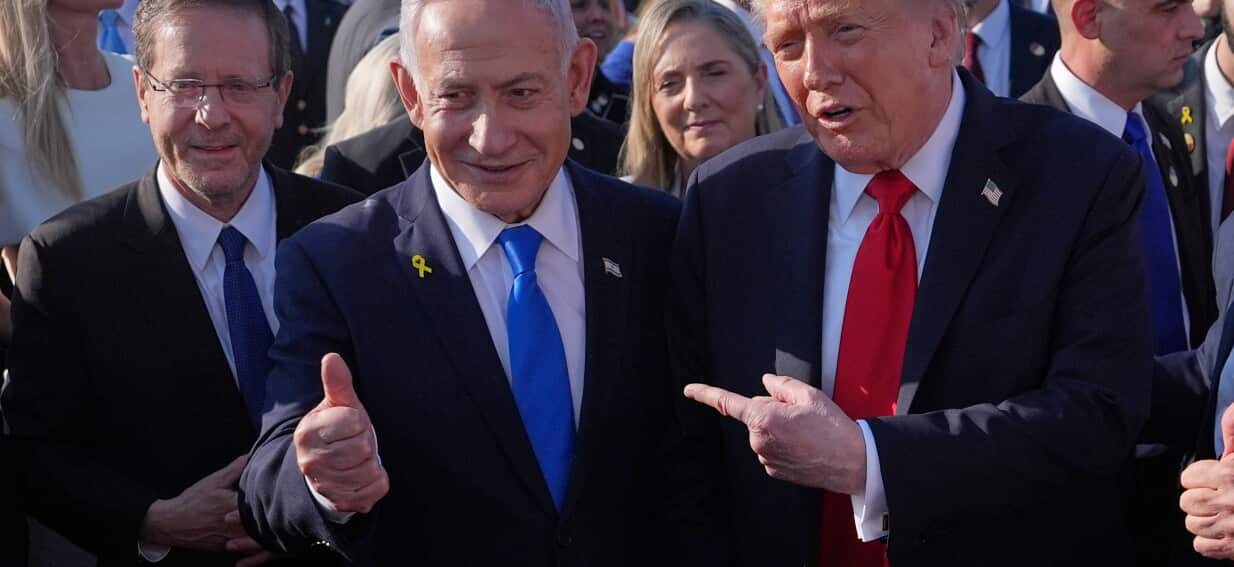
United States President Donald Trump has flagged an abrupt termination to Washington’s multi-billion-dollar military aid pact with Israel, declaring the close Middle Eastern ally is sufficiently prosperous to fund its own defence.
SBS News Top Stories reported that the US president claimed an arrangement was sealed "a month ago" to extinguish the lucrative defence funding scheme, which is valued at roughly US$5.4 billion (A$8.3 billion). Speaking on the rationale behind the sudden strategic shift, Mr Trump insisted that Israel had outgrown the need for external financial underwriting, summarising: "they don't need it".
The announcement represents a profound disruption to decades of bipartisan American foreign policy. Historically, Washington has guaranteed Israel’s qualitative military edge over regional adversaries via sweeping, multi-year memorandums of understanding. Under existing bilateral commitments, billions of taxpayer dollars flow annually into Israeli munitions procurement, missile defence development, and joint security initiatives.
Abrupt pivot in Washington's strategic funding
The prospect of an expedited exit from the multi-billion-dollar security agreement reflects Mr Trump’s broader "America First" doctrine, which has consistently scrutinised foreign subsidies and demanded that strategic partners assume greater self-reliance. While previous administrations viewed defence assistance as an essential pillar of Middle Eastern deterrence, the current White House appears willing to recalibrate long-standing commitments based on transactional economic assessments.
Officials in Washington have yet to publicly release the comprehensive terms of any renegotiated pact. Analysts note that dismantling such an expansive apparatus requires navigating complex legislative hurdles within the US Congress, where support for Israeli military assistance has traditionally commanded staunch bipartisan backing. Lawmakers on Capitol Hill are expected to demand clarity on whether the executive branch can unilaterally modify agreements already codified into federal spending measures.
Prosperity cited as rationale for defence cuts
Central to Mr Trump’s justification is the argument that Israel's advanced economy and sophisticated domestic arms sector obviate the need for foreign grants. Israel possesses one of the world's most formidable defence industries, exporting cutting-edge electronic warfare, drone technology, and air defence hardware to global clients.
Despite this economic maturity, the timing of the proposed cessation creates operational uncertainties. The region remains locked in prolonged security crises, with Israeli forces heavily engaged across multiple operational fronts. Transitioning away from American procurement subsidies—which often mandate that funds be spent with US defence contractors—could compel Israeli planners to overhaul long-term acquisition strategies and absorb higher domestic fiscal burdens.
Repercussions across the Middle East and Canberra
The policy shift carries reverberations far beyond Washington and Jerusalem, including for middle powers such as Australia. Canberra has long balanced its diplomatic alignment with the United States alongside firm support for regional stability and international law across the Middle East.
Australian foreign policy observers suggest that any weakening or restructuring of the American security architecture in the Levant could accelerate shifting alliances. Regional powers, including Gulf Arab states and Tehran, will be closely watching whether the US withdrawal from funding arrangements signals a broader disengagement from Middle Eastern deterrence or merely a budgetary reallocation.
For now, diplomatic circles are awaiting formal documentation to substantiate the president’s assertion that a definitive settlement was reached weeks ago. Should the funding cessation take effect, it would mark one of the most consequential realignments in American-Israeli relations since the 1970s.