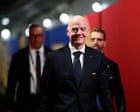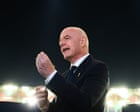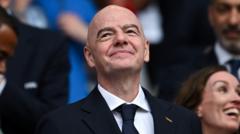
ZURICH – European football’s powerful governing body, UEFA, has openly declared it has “lost confidence” in the leadership of FIFA President Gianni Infantino, throwing global football governance into fresh turmoil. The stunning rebuke, reported by BBC Sport, escalates an already acrimonious dispute stemming from the sudden shelving of a controversial multi-billion dollar investment plan.
Sources close to UEFA suggest a deep rift has formed between the European confederation and Infantino, who many believe has become increasingly autocratic since his election in 2016. The declaration marks a significant escalation in tensions, with UEFA, representing many of football’s financial powerhouses, effectively issuing a vote of no confidence in the sport’s most powerful figure.
The Scrapped $38 Billion Deal That Sparked Fury
At the heart of the escalating crisis is a proposed $38 billion (approximately AUD $57 billion) investment deal, purportedly backed by a consortium of Saudi and Japanese investors, which Infantino championed. The opaque proposal, which involved new tournaments such as an expanded Club World Cup and a Global Nations League, was met with fierce resistance from UEFA and several top European clubs. Concerns ranged from the lack of transparency surrounding the deal's financing to the potential for fixture congestion and player welfare issues.
Infantino had reportedly pushed for swift approval of the package, hinting at an imminent deadline for the investors. However, the plan was ultimately withdrawn in May this year, with Infantino acknowledging that there was “no way” to proceed without the support of the various confederations. While its abandonment was a temporary relief for critics, the manner in which it was presented and subsequently withdrawn appears to have irreparably damaged trust.
A Perceived Autocratic Shift in FIFA
UEFA’s public declaration is understood to be the culmination of growing frustration over Infantino's perceived shift towards a more centralised, less consultative leadership style. Many within European football feel that FIFA, under Infantino, has become less transparent and more focused on pushing through its own agenda, often at the expense of established continental competitions and the input of key stakeholders.
Critics argue that Infantino's enthusiasm for new competitions and investment vehicles, particularly those with significant Middle Eastern backing, echoes some of the concerns that plagued his predecessor, Sepp Blatter. There's a palpable sense that the lessons from FIFA's past scandals, which led to Blatter's downfall, are being overlooked in a pursuit of new revenue streams and expanded tournaments.
What This Means for Global Football
The public breakdown in trust between UEFA and FIFA carries significant implications for the future of global football governance. UEFA is not merely another confederation; it controls some of the world's most lucrative club competitions, including the Champions League, and represents a substantial portion of FIFA's revenue and influence. A prolonged and open conflict could lead to a fracturing of international football, potentially impacting everything from World Cup qualification formats to player transfer regulations.
While FIFA has yet to formally respond to UEFA’s pointed remarks, the ball is now firmly in Infantino's court to address the deep-seated concerns. Rebuilding confidence will require more than just dialogue; it will likely necessitate a fundamental shift in approach, prioritising transparency and genuine collaboration with all confederations, especially the powerful European bloc. The coming months are set to be a critical test for Infantino's leadership and the unity of world football.