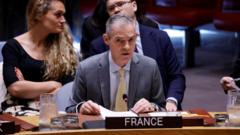
In a highly unusual diplomatic manoeuvre, the United States delegation staged a walkout from a United Nations Security Council meeting this week, departing during a statement delivered by France. The dramatic exit has cast a spotlight on increasingly fractious international relations, particularly concerning human rights oversight at the global body.
The walkout follows Washington’s contentious decision to align with traditional adversaries, North Korea and Russia, in opposing the extension of the term for the UN High Commissioner for Human Rights. This vote, which occurred prior to the Security Council incident, has sent ripples through diplomatic circles, raising questions about the US’s commitment to multilateral human rights advocacy.
Unprecedented Diplomatic Theatre
The scene unfolded as the French representative began an intervention during the Security Council proceedings. According to reports from BBC World, the US delegation rose en masse and departed the chamber, leaving an unmistakable visual cue of their displeasure. Such an overt display of disapproval during a fellow permanent member's address is rare and underscores the depth of the current diplomatic rift. While the exact trigger for the walkout remains officially undisclosed by Washington, its timing, immediately following the contentious human rights commissioner vote, suggests a direct linkage.
Observers at the UN headquarters in New York indicated a palpable tension in the air even before the French speaker commenced. The US stance on the human rights commissioner’s role has drawn criticism from several allies, who view the position as crucial for upholding international norms and investigating abuses globally. This latest action only serves to escalate concerns regarding America’s foreign policy direction under the current administration.
Aligning with Adversaries
The decision by the US to vote alongside North Korea and Russia against the human rights commissioner's reappointment has baffled many long-standing allies. For decades, the United States has publicly championed human rights globally, often using its platform at the UN to condemn nations with poor records. To be seen in concert with regimes frequently criticised for their own human rights abuses represents a significant departure from established US diplomatic practice.
Analysts suggest this move could be interpreted in several ways: a deliberate recalibration of US priorities, a strategic effort to dismantle institutions perceived as critical of Washington, or perhaps a tactical protest against the incumbent commissioner. Whatever the underlying motivation, the optics are undeniably challenging for a nation that prides itself on its human rights record. The cost of such a realignment, both in terms of international credibility and diplomatic goodwill, remains to be fully calculated.
Fallout and Future Implications
The immediate fallout from the walkout and the preceding vote is primarily one of diplomatic embarrassment and increased global scrutiny of US intentions. European nations, including France, have expressed private concern over the erosion of international consensus on human rights issues. There are fears that such actions could embolden authoritarian regimes and weaken the UN’s capacity to address abuses effectively.
Domestically, the move could also face scrutiny, with human rights organisations and some political factions likely to question the rationale behind aligning with nations like North Korea on such a sensitive matter. The long-term implications for the UN Human Rights Council and the broader human rights architecture are significant. If leading powers continue to undermine key roles and institutions, the effectiveness of international mechanisms for accountability could be severely compromised. The incident prompts a reassessment of international partnerships and the enduring strength of multilateralism in an increasingly fragmented world.