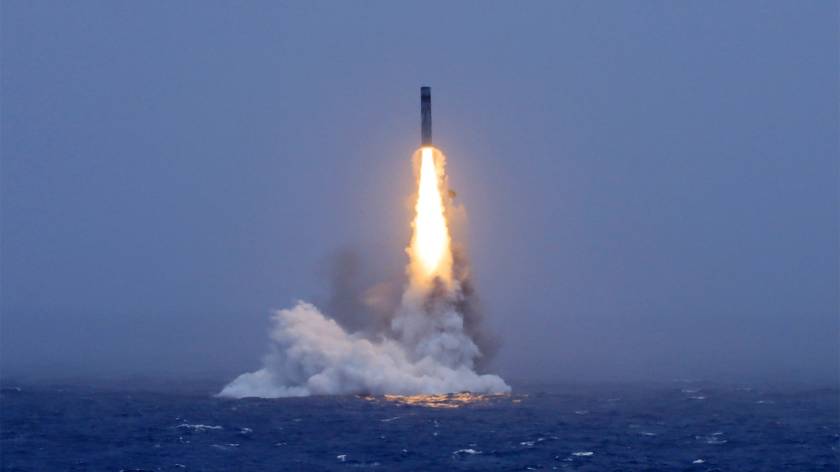
Canberra has raised sharp concerns over Beijing’s rare Pacific ballistic missile test, after Chinese officials delivered an eleventh-hour warning to Foreign Minister Penny Wong while she was visiting Fiji.
The diplomatic approach, disclosed as Australia seeks greater strategic clarity from the People’s Liberation Army, underscores growing regional friction over Beijing’s rapid nuclear modernisation. Crikey reported that Chinese authorities reached out to Senator Wong during her official tour of Suva, placing Canberra on notice shortly before the long-range projectile was fired into waters north-east of Australia.
Diplomatic alert on Pacific tour
The timing of the notification placed the Albanese government in a sensitive position among Pacific Island neighbours, where memories of twentieth-century nuclear testing remain an enduring source of regional trauma.
Senator Wong was in Fiji to reinforce Australia’s security and economic partnerships when Beijing’s emissaries made direct contact. While the advance notice adhered to minimum diplomatic protocols to prevent miscalculation in international airspace and shipping lanes, the disclosure caused immediate unease across regional capitals.
Senior diplomatic officials in Canberra confirmed Australia had registered its opposition to actions that risk destabilising the region, reiterating calls for China to adhere to established international norms and open lines of strategic communication.
Deepening fears over undersea deterrent
Defence planners are examining the operational details of the launch, with Crikey reporting that particular scrutiny has fallen on the potential role of China’s expanding nuclear-powered ballistic missile submarine fleet.
The prospect of Beijing demonstrating an enhanced undersea strike capability in the South Pacific presents a complex challenge for Australia. The launch coincided with heightened scrutiny of Canberra’s own multi-decade, $368 billion AUKUS partnership, which aims to deliver conventionally armed, nuclear-powered submarines to the Royal Australian Navy from the early 2030s.
Analysts warn that an operational Chinese sea-based deterrent operating further into the blue waters of the Pacific fundamentally changes the strategic geography for Australia and its allies, compressing warning times and testing maritime surveillance networks.
Canberra presses Beijing for transparency
The Albanese government has consistently pushed China to exercise restraint and demonstrate greater transparency regarding its strategic arsenal.
While bilateral trade relations between the two nations have substantially stabilised over the past 18 months, defence ties remain distinctly fraught. Australian officials continue to encounter resistance when pressing Chinese counterparts for meaningful strategic dialogues or notifications regarding military exercises in international waters.
Pacific leaders have also voiced persistent unease over major-power contestation spilling into their maritime exclusive economic zones, citing the foundational principles of the Treaty of Rarotonga, which established a nuclear-free zone in the South Pacific.
Shifting calculus across the Indo-Pacific
The launch serves as a stark reminder of the limits of diplomatic stabilisation between Canberra and Beijing. Even as ministerial visits resume and trade barriers fall, the structural competition in the maritime domain continues to intensify.
Australian officials maintain that without verifiable transparency and established guardrails, unannounced or short-notice strategic tests risk dangerous misinterpretation. Canberra is expected to raise the launch at upcoming regional summits, ensuring the missile test remains central to broader security discussions with its Pacific family.