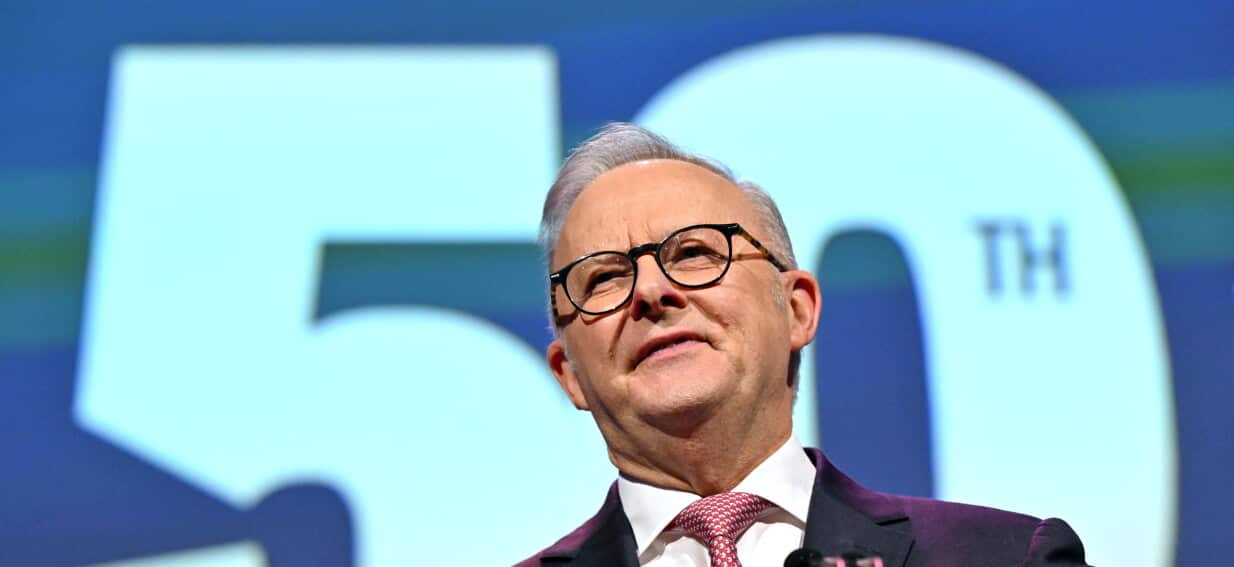
BRISBANE — In a political landscape often defined by meticulous choreography, a momentary mechanical failure at Labor’s National Conference offered a rare, albeit brief, glimpse of Prime Minister Anthony Albanese seemingly losing control of his immediate surroundings. The Premier was unexpectedly sidelined by a faulty escalator, a minor incident that quickly became a metaphor for an event showcasing the Prime Minister's escalating, rather than diminishing, grip on the Labor Party.
The three-day conference, held in Brisbane, was overwhelmingly characterised by a disciplined narrative and unified messaging, a stark contrast to the more fractious internal debates that have sometimes plagued past Labor gatherings. Major policy decisions, ranging from nuclear submarine acquisition under the AUKUS pact to the contentious stage three tax cuts, sailed through with minimal public dissent, largely due to the groundwork meticulously laid by the party leadership and the Prime Minister himself.
A Momentary Mechanical Metaphor
The image of the Prime Minister momentarily waylaid by a malfunctioning escalator — a scene that, while brief, made for an unusual visual — underscored the otherwise smooth operation of the entire conference. SBS News Top Stories reported on this momentary slip, noting it as one of the few instances where events appeared to deviate from the tightly managed script. Observers noted that even this minor disruption was handled swiftly, allowing the conference and its key messaging to proceed largely unhindered. The incident, rather than signalling deeper issues, served to highlight the generally unshakeable control exercised by Mr. Albanese over the proceedings, where policy debates and resolutions were steered with a firm hand.
Unanimous Approval for Key Policies
One of the most significant outcomes of the conference was the emphatic endorsement of the AUKUS defence pact, a cornerstone of the Albanese government's foreign policy. Despite some historical scepticism within sections of the Labor left regarding defence alliances and nuclear energy, the Prime Minister successfully marshalled support for the acquisition of nuclear-powered submarines. This outcome was a testament to his persuasive power and the party's desire for unity. Similarly, the government also solidified its position on the stage three tax cuts, opting to proceed with the planned adjustments despite calls from some within the party for a re-evaluation given current economic pressures. The party's decision to back government policy on these two fronts signalled a strong mandate for Mr. Albanese’s leadership and strategic direction.
Steering the Economic Course
Beyond defence and tax, the conference also provided a platform for the government to articulate its economic vision amidst ongoing cost-of-living pressures facing Australian households. While the policy resolutions focused on strengthening Medicare, expanding vocational training, and boosting renewable energy, the overarching message was one of responsible economic management and a measured approach to fiscal policy. Delegates largely rallied behind the government’s approach, demonstrating significant cohesion and a clear commitment to supporting the Prime Minister's agenda. The discussions, while robust at times, remained within the parameters set by the party leadership, avoiding any major ruptures or unexpected policy diversions.
A United Front Towards the Next Election
The Labor National Conference concluded with a palpable sense of unity and purpose, projecting an image of a party fully behind its leader as it gears up for the next federal election. The Prime Minister’s ability to guide the party through potentially contentious debates with minimal public discord reinforced his authority and strategic acumen. The escalator incident, while a momentarily diverting vignette, ultimately faded into the backdrop of a conference that strongly affirmed Mr. Albanese’s iron grip on the Labor Party and its path forward.