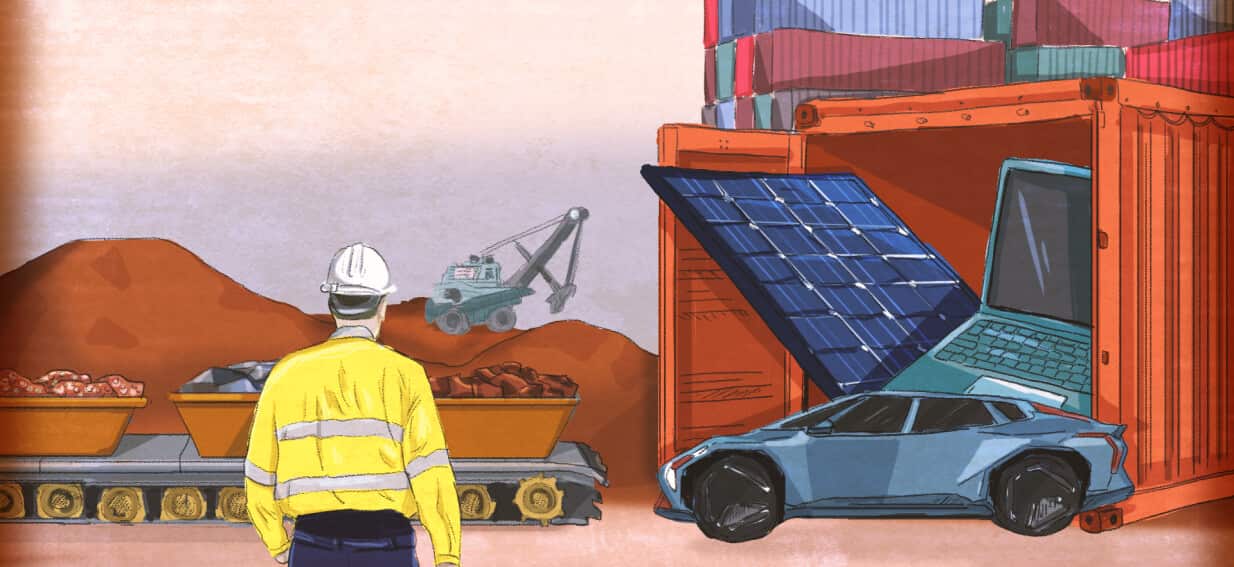
Australia, a nation blessed with an abundance of minerals, energy, and agricultural produce, finds itself in a peculiar economic predicament. Despite being a global quarry and farm, the country consistently exports its raw materials only to repurchase them as expensive, value-added finished goods. This economic anomaly, highlighted by SBS News Top Stories, raises fundamental questions about Australia's long-term prosperity and its position in the global supply chain.
The phenomenon, often dubbed the ‘lucky country’s’ curse, sees iron ore dug from the Pilbara, coal extracted from Queensland, and agricultural products harvested across the continent, leave Australian shores largely unprocessed. These raw commodities are then transformed overseas into cars, electronics, machinery, and countless consumer items, which are subsequently imported back, often at significantly higher price points. This pattern not only represents a missed opportunity for domestic job creation and industrial diversification but also exposes Australia to the volatility of global manufacturing and shipping costs.
The Export-Import Imbalance: A Closer Look
Australia’s economy has long relied on its robust resources sector, which has driven decades of growth and provided substantial export revenues. However, this reliance has inadvertently stifled the development of a strong domestic manufacturing base capable of processing these raw materials into high-value products. While the mining sector thrives, the broader economic landscape struggles to capture the full economic benefit of its natural endowments.
For instance, Australia is one of the world's largest producers of lithium, a critical component in electric vehicle batteries. Yet, the vast majority of this lithium leaves the country as concentrate, only to return as finished battery packs or electric vehicles manufactured elsewhere. This pattern is replicated across numerous sectors, from rare earths essential for advanced electronics to agricultural commodities that could be processed into premium food products or biotechnologies. The economic leakage is substantial, with jobs, intellectual property, and profits generated offshore rather than within Australia.
Historical Factors and Globalisation
The roots of this imbalance are complex, stemming from a combination of historical factors, economic policy choices, and the pressures of globalisation. For decades, Australia’s economic strategy prioritised efficiency through specialisation, focusing on areas of comparative advantage such as resource extraction and agriculture. Manufacturing, particularly in heavy industries, began to decline in the latter half of the 20th century as global supply chains became more integrated and lower-cost production centres emerged.
Trade agreements, while opening new markets for Australian raw materials, also facilitated the influx of cheaper manufactured goods, further challenging domestic industries. The high cost of labour, energy, and regulatory compliance in Australia has often been cited as a deterrent for large-scale value-adding manufacturing, pushing processing offshore to countries with more competitive operating environments.
The Call for Value-Adding and Sovereign Capability
There is a growing chorus of voices, echoed by recent discussions reported by SBS News Top Stories, advocating for a national strategic shift towards greater value-adding and the development of sovereign manufacturing capabilities. Proponents argue that by processing more of its raw materials domestically, Australia could create hundreds of thousands of new jobs, diversify its economy, and enhance its economic resilience.
Initiatives focusing on critical minerals processing, advanced manufacturing, renewable energy component production, and agricultural technology are gaining traction. These efforts aim to capture more of the value chain, ensuring that the wealth generated from Australia’s natural resources benefits Australians directly, rather than primarily enriching overseas economies. Investment in research and development, skills training, and targeted government support for emerging industries are seen as crucial steps in this transformation.
The Path Forward: Balancing Resources and Innovation
Addressing this long-standing economic paradox will require a concerted and sustained effort. It involves not only government policy and investment but also a cultural shift towards embracing innovation and industrial diversification. While Australia's resource sector will undoubtedly remain a cornerstone of its economy, strategically investing in downstream processing and advanced manufacturing offers a pathway to a more robust, diversified, and resilient future.
By leveraging its natural advantages with astute economic planning, Australia has the opportunity to move beyond being merely a supplier of raw materials to becoming a sophisticated producer of high-value goods, ensuring that more of its wealth remains on its shores.